Car Maintenance & Repair · Oct 19, 2026
Transmission Overheating: Cooler Problem or Complete Replacement?
An overheat warning does not automatically mean the transmission is ruined. Use this checklist to separate fluid, cooler and load problems from internal damage.
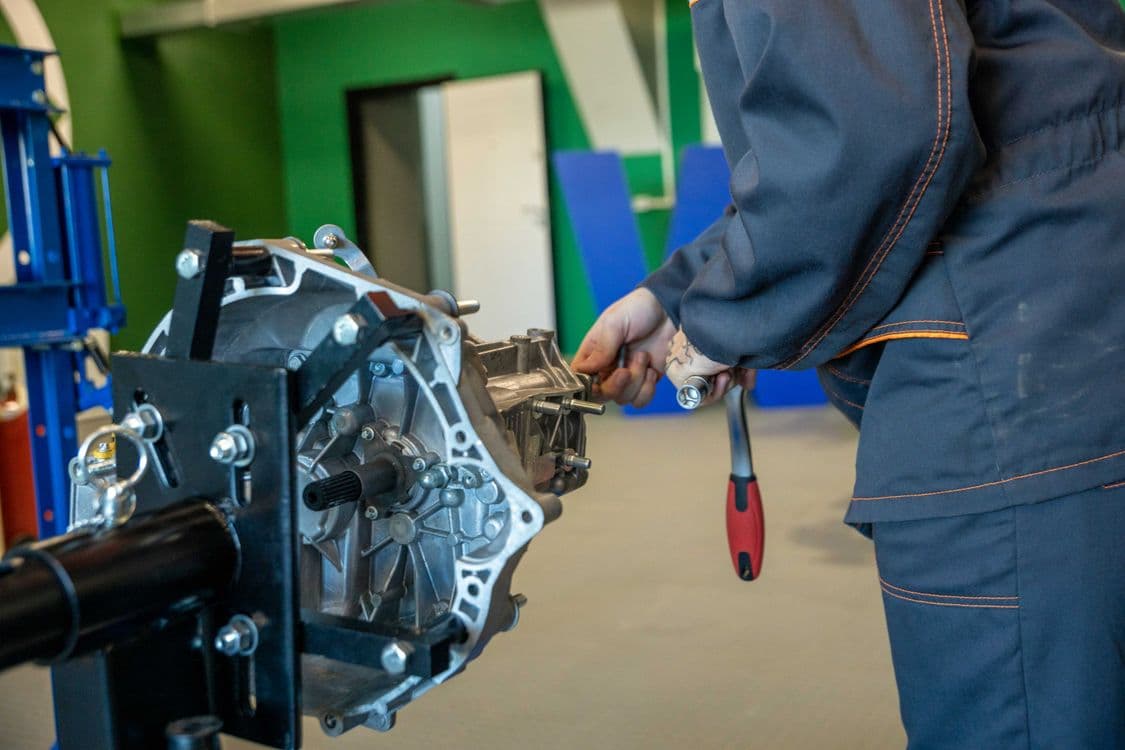
An automatic-transmission overheat warning means the unit needs to cool and the cause needs diagnosis; it does not by itself prove that the complete transmission must be replaced. A correct decision starts with the vehicle-specific warning procedure, scan data, fluid level and condition, cooler flow, engine-cooling performance, operating load, and evidence of internal clutch or torque-converter slip.
What should you do when the warning appears?
Follow the instructions in the vehicle owner's manual. Move out of traffic and stop safely when directed. Continuing to drive while the warning remains active can turn a correctable cooling or fluid problem into internal damage.
Do not open hot cooling-system components or assume every vehicle uses the same cool-down procedure. Some manufacturers direct the driver to leave the engine running in Park while the transmission cools; other vehicles may specify different steps. The manual for the exact year, model, powertrain, and transmission is the controlling source.
After the vehicle has cooled, record what happened:
- The warning message and any warning lights
- Outside temperature and road speed
- Trailer or payload weight, if applicable
- Hill grade, stop-and-go traffic, or prolonged low-speed operation
- Gear or drive mode in use
- Any flare, shudder, delayed engagement, slipping, odor, or leak
- Whether the warning returned under lighter driving
That context helps a technician reproduce the condition without treating the dashboard message as a diagnosis.
Why transmissions overheat
Heat rises when the transmission generates more heat than the fluid and cooler can remove. The cause may be external to the gearbox, internal to it, or a combination.
Fluid level, type, or leakage
A low level can reduce lubrication and hydraulic control. An incorrect level can also cause operating problems, and the specified checking method matters because many transmissions require a temperature-dependent procedure. Use only the exact fluid specification and fill process identified by the manufacturer.
Inspect the pan, case seams, axle or output seals, cooler lines, fittings, and the heat exchanger for leakage. Fluid on the ground does not reveal the source reliably; airflow can carry it away from the original leak.
Restricted or ineffective cooler circuit
Automatic-transmission fluid may pass through a heat exchanger in the radiator, a separate air-to-oil cooler, or both. A kinked line, damaged fitting, restricted cooler, obstructed airflow, or a vehicle-specific thermostatic bypass fault can reduce heat rejection.
This is not theoretical. GM service information has documented particular vehicles requiring inspection of cooler-line connections and a thermal bypass valve. That example is application-specific—it is a reason to check OEM bulletins by VIN, not a universal diagnosis.
Engine-cooling or airflow problem
On vehicles that exchange transmission heat through the radiator, high engine-coolant temperature can reduce the system's ability to cool transmission fluid. A weak fan, blocked condenser or radiator, coolant-system fault, or missing airflow panel can therefore contribute. The engine temperature, fan command, and actual fan operation should be evaluated with the transmission data.
Heavy load or repeated low-speed slip
Towing, high payload, steep grades, hot weather, repeated creeping, and frequent gear hunting can add heat. Ford owner information, for example, explains that trailer towing loads the transmission and that Tow/Haul or grade-assist functions can help reduce excessive shifting on equipped vehicles. Those instructions vary by model, so use the vehicle's published tow limits and operating guidance.
Internal slip or control fault
Worn clutch packs, a slipping torque converter clutch, inadequate line pressure, a valve-body problem, solenoid or sensor faults, and incorrect control commands can generate heat inside the unit. Cooling-system repairs will not correct an internally slipping transmission. Conversely, replacing the transmission without correcting a restricted cooler or contaminated line can endanger the replacement.
What a proper diagnosis should include
A shop should use service information for the exact application, not a generic temperature rule. A useful inspection plan includes:
- Scan the powertrain and transmission modules for current, pending, and history codes.
- Compare transmission-temperature data with the warning state and other sensor readings.
- Verify the fluid specification, level, and checking temperature using the OEM procedure.
- Inspect the fluid and pan for debris when the prescribed service procedure calls for it.
- Inspect cooler lines, fittings, bypass devices, and heat exchangers for leaks or damage.
- Test cooler flow or pressure only with the manufacturer's method and equipment.
- Check coolant temperature, fan operation, radiator and condenser airflow, and related faults.
- Road-test safely while watching commanded gear, input and output speeds, converter-clutch slip, and temperature.
- Check for technical service bulletins, calibration updates, and special procedures tied to the VIN.
Ask for the scan results and findings in writing. “It got hot” is an observation; it is not enough evidence to order a transmission.
Cooler repair, fluid service, or replacement?
A cooler-circuit repair may be appropriate when testing identifies a leaking line, restricted heat exchanger, failed application-specific bypass device, or airflow problem and there is no evidence of consequential internal damage.
A fluid or level correction may be part of the repair when the wrong specification, improper fill, or service-related level error is confirmed. A fluid change cannot restore friction material, bearings, seals, or hydraulic components that are already damaged.
Complete replacement becomes more reasonable when diagnosis confirms substantial internal wear or failure—for example, persistent ratio errors or slip supported by scan data, hydraulic-test results outside specification, or significant internal debris found through the prescribed inspection. A teardown or specialized transmission evaluation may be needed before that decision.
If replacement is justified, use the automatic-transmission fitment checklist. The VIN is the starting point, but the transmission code, drive layout, connectors, cooler fittings, calibration, and installation scope also need to match.
Buyer and repair checklist
Before approving work or ordering a replacement, collect:
- Full 17-character VIN
- Transmission identification code or tag
- Exact engine and two-wheel-, four-wheel-, or all-wheel-drive configuration
- Diagnostic codes and freeze-frame or event data
- Recorded transmission temperature and test conditions
- Fluid specification, level-check method, and condition findings
- Cooler-flow, line, heat-exchanger, and fan inspection results
- Evidence supporting internal slip or damage
- Plan for cooler and line cleaning or replacement after an internal failure
- Required programming, initialization, and adaptive relearn
- Written list of included components
Use the VIN decoder to confirm the basic vehicle identity, then compare the original unit's identifiers and physical configuration. When those details are ready, request a transmission quote using the exact vehicle and transmission information.
Frequently asked questions
Can low transmission fluid cause overheating?
It can contribute when the level is below the manufacturer's specified range, often because of a leak. The level must be checked with the correct temperature, gear-selection, and fill procedure for that transmission.
Will adding an auxiliary cooler fix the problem?
Not necessarily. Extra cooling cannot repair internal slip, a wrong fluid level, an engine-cooling fault, or a blocked circuit. It also should not be used to exceed the vehicle's published towing or payload limits. Diagnose first, then follow manufacturer guidance for approved equipment.
Does dark fluid mean the transmission needs replacement?
Not by itself. Appearance and odor are clues, but the decision should also use codes, scan data, operating symptoms, pan or filter findings, and vehicle-specific tests. Some service procedures also limit when fluid should be sampled or the pan removed.
Should the cooler be addressed when a transmission is replaced?
Yes. The installer should follow the manufacturer's procedure for inspecting, flushing, or replacing the cooler and lines. Internal failure can leave debris in the circuit, while restricted flow can overheat a replacement unit.
The practical answer
Treat an overheat warning promptly, but do not jump directly to replacement. First establish whether the transmission is being overheated by fluid loss, cooler restriction, engine-cooling performance, excessive load, a control problem, or internal slip. The repair should correct the measured cause—and if a replacement is required, the cooler circuit, fluid specification, fitment, and programming plan belong in the same job.