Car Maintenance & Repair · Oct 21, 2026
Before Installing a Replacement Transmission: Flush or Replace the Cooler?
Before installing a replacement transmission, determine whether the cooler, lines and bypass valve require OEM-specified cleaning, testing or replacement.
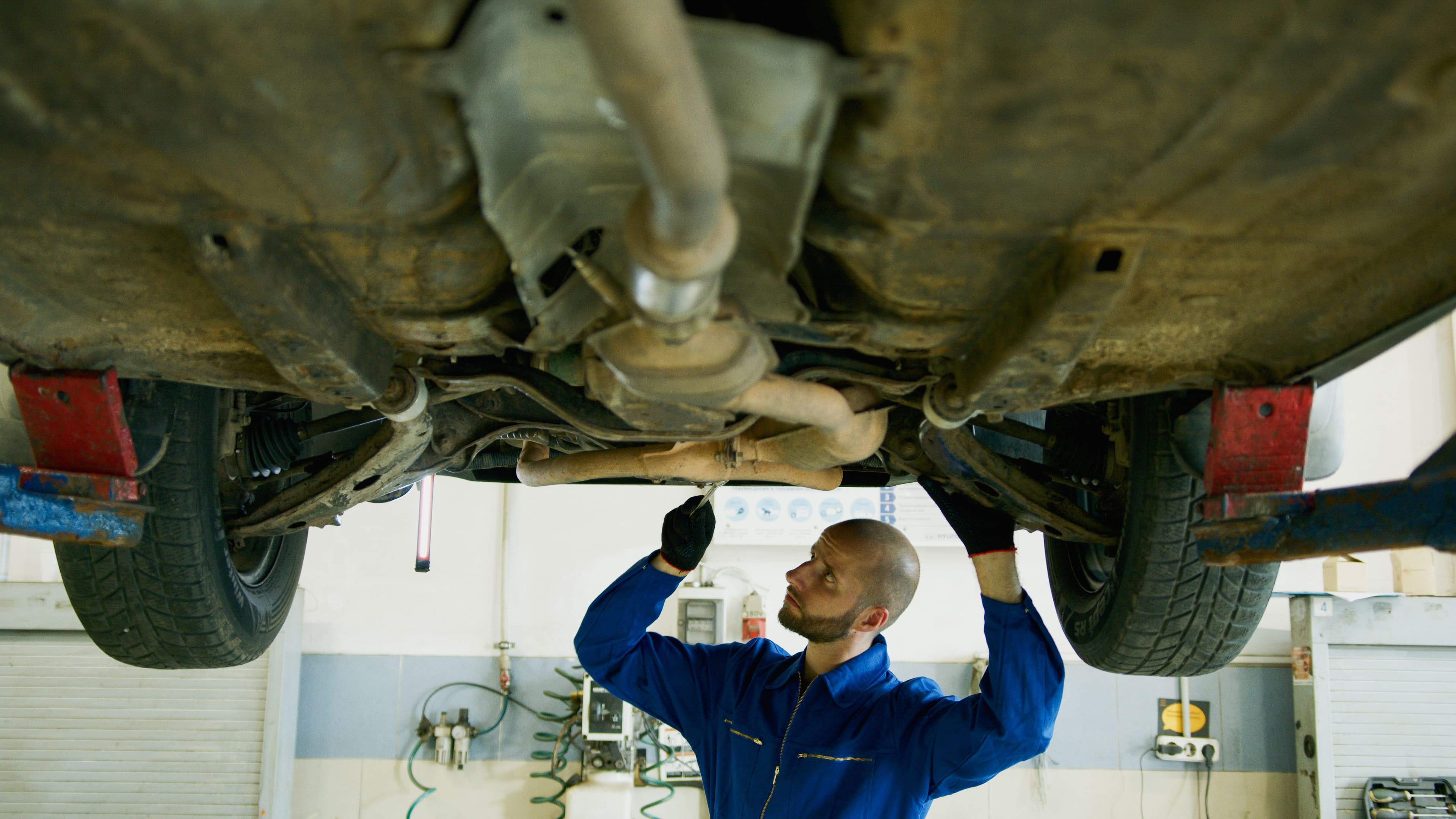
A replacement automatic transmission should not be connected to an unverified cooler circuit. Internal failure can leave metal and friction material in the radiator heat exchanger, auxiliary cooler, hoses, lines, or bypass valve. Depending on the vehicle and failure mode, the correct preparation may be an OEM-specified flush, replacement of selected cooler components, or replacement of the entire cooler circuit—not a universal “flush everything” rule.
Why the old cooler can threaten the replacement transmission
Transmission fluid carries heat away from the unit and often circulates through a heat exchanger inside the radiator, a separate air-to-oil cooler, or both. If the original transmission fails internally, the same fluid can carry debris into those passages.
That contamination matters for two reasons:
- Trapped debris can return to the replacement transmission.
- A restricted cooler can reduce fluid flow and heat removal.
Nissan bulletin NTB15-013e illustrates the risk for specific CVT-equipped Altima, Juke, Maxima, Murano, Pathfinder, Quest, and Rogue applications. It states that metal and friction material may remain in the radiator, hoses, bypass valve, or external cooler and may contaminate or restrict a newly serviced CVT. The bulletin then gives application-specific flushing procedures. It is useful evidence of the principle, but its method should not be copied onto a different vehicle.
Hyundai bulletin 20-AT-016H provides another model-family example: its remanufactured automatic-transmission procedure requires the oil cooler and hoses to be flushed with the specified equipment before installation where the applicable cooler arrangement is present.
The buyer’s lesson is simple: the cooler plan belongs on the repair order before the replacement unit is installed.
Start with the exact failure, not a generic flush
Not every removed transmission has contaminated its cooler. A unit replaced for a cracked case, an electronic problem, or another fault without internal debris may require a different cooler procedure from a unit with a failed clutch, bearing, belt, chain, planetary set, pump, or torque converter.
Ask the shop to document:
- The codes, symptoms, and test results supporting transmission replacement.
- The condition of the drained fluid.
- What was found in the pan, filter, or magnets.
- Whether metal, clutch material, coolant, or water was present.
- Whether the torque converter failed or will be reused.
- Which cooler components the vehicle actually has.
- The manufacturer procedure for that VIN and failure type.
If the original complaint was overheating, first separate cooler-flow and airflow problems from internal transmission damage. The transmission overheating diagnosis guide covers that earlier decision. This article begins after replacement has been justified.
Map the entire cooler circuit
“Transmission cooler” may describe several parts rather than one component. The circuit can include:
- A radiator-integrated fluid heat exchanger
- A transmission-mounted warmer or heat exchanger
- A separate auxiliary cooler
- Steel, aluminum, or flexible cooler lines
- Quick-connect fittings and seals
- A thermostatic bypass valve
- Temperature or flow-control hardware
The installer should trace the actual flow path using current service information. A visible auxiliary cooler does not prove that fluid bypasses the radiator exchanger, and a clean hose end does not prove that small internal passages are clear.
Vehicle configuration matters. Engine, drivetrain, towing package, production date, and cooling option can change the routing. Start with the VIN decoder, then verify the original transmission identification and the physical cooler layout.
Flush, test, or replace: how the decision differs
When an OEM flush may be appropriate
A flush may be appropriate when the manufacturer publishes a procedure for the exact application and the cooler design can be cleaned and verified. That procedure may specify flow direction, approved solvent or fluid, equipment, pressure limits, repetition, and a final flow test.
More pressure is not automatically better. An improvised chemical, shop-air blast, or universal machine can damage a cooler, leave residue, or push contamination into a bypass passage. The technician should follow the prescribed method and safety precautions.
When replacement may be required
Replacement becomes more likely when:
- The service procedure identifies a non-flushable cooler or heat exchanger.
- Heavy contamination cannot be removed or verified.
- Flow remains below specification after the permitted cleaning procedure.
- Coolant has entered the transmission-fluid circuit through a failed radiator heat exchanger.
- A line is kinked, crushed, internally delaminated, corroded, or leaking.
- A thermostatic bypass valve is stuck, damaged, or contaminated and is not separately serviceable.
- The vehicle manufacturer directs replacement for the documented failure.
Sometimes replacing the radiator is part of the transmission repair because the transmission heat exchanger is built into it. On another vehicle, only an auxiliary cooler, line assembly, or transmission-mounted warmer may be affected. The correct scope must come from the applicable service information, not appearance alone.
Why “the fluid came out clean” is not enough
Clean-looking discharge is useful information, but it does not by itself prove correct flow, correct temperature control, or complete removal of fine material. A proper procedure may require measuring flow, inspecting captured material, flushing in both directions, or replacing components that cannot be validated.
Questions to ask before buying a transmission
The transmission and installation plan should be evaluated together. Before placing an order, ask:
- What exact transmission code, tag, part number, or interchange identifies the replacement?
- Does the torque converter come with the unit, and is it the correct converter?
- Were the donor ports capped to limit dirt and moisture during storage and shipping?
- What cooler components are included with the transmission, if any?
- Has the installer identified the radiator cooler, auxiliary cooler, warmer, lines, and bypass valve?
- Will the circuit be cleaned, tested, or replaced under the OEM procedure?
- Which fluid specification and fill-temperature procedure apply?
- Are a new filter, seals, one-time-use fasteners, or line retainers required?
- Does the vehicle require programming, configuration, adaptive reset, or relearn?
- What records must be kept for the parts and installation warranty?
A quote for the transmission alone cannot answer these installation questions. Include the VIN, original transmission identifier, failure findings, and cooler configuration when you request a transmission quote.
Replacement-transmission fitment checklist
Before approving the part, verify all of the following:
- Full 17-character VIN
- Year, make, model, engine, drivetrain, and build date
- Original transmission tag, code, and complete part number
- Two-wheel drive, four-wheel drive, or all-wheel drive configuration
- Case, bellhousing, mount, axle or output, and transfer-case interfaces
- Electrical connectors, sensors, wiring, and control-module arrangement
- Cooler-port type, location, thread or quick-connect design
- Torque-converter compatibility and installation depth procedure
- Included versus transferred brackets, mounts, switches, and hardware
- Exact fluid specification and required quantity
- Cooler cleaning, flow-test, or replacement plan
- Programming, calibration, and adaptive-learning requirements
- Return, core, and installation-document requirements
Do not assume that a unit fitting the bellhousing will communicate correctly or connect to the existing cooler lines. Small production changes can affect hardware, calibration, and fittings.
Avoid these installation shortcuts
Do not reconnect dirty lines merely because the replacement arrived ready to install. Do not pour solvent through the cooler without an approved method. Do not mix transmission-fluid specifications to save a separate fill. Do not reuse a failed torque converter when the service procedure requires replacement. Do not begin the job before confirming programming and relearn access.
Also avoid relying on warranty language as a technical procedure. Warranty terms can require documentation, but the current OEM repair information determines how the vehicle should be diagnosed and serviced.
Frequently asked questions
Must every transmission cooler be flushed after replacement?
No. Some applications specify flushing, others require testing or replacement, and the required action can change with the failure type and cooler design. Follow the procedure for the exact vehicle and transmission.
Can metal stay inside the radiator cooler?
Yes. Automatic-transmission fluid may pass through a small heat exchanger inside the radiator. Internal failure debris can become trapped there and in connected lines, hoses, valves, or an auxiliary cooler.
Does a new radiator always come with a clean transmission cooler?
A new, correct radiator should contain a new integrated heat exchanger, but the rest of the circuit may still include contaminated lines, hoses, bypass components, or an auxiliary cooler. The complete path still needs attention.
Can a restricted cooler damage a replacement transmission?
A restriction can reduce fluid circulation and heat removal. Whether it causes damage depends on severity and system design, but it must be corrected before the replacement is returned to service.
Should the cooler be handled before or after the replacement arrives?
Plan the procedure before ordering and complete the required cooler work before connecting the replacement. This prevents delays and makes the full installation cost and parts list clearer.
Protect the replacement before the first startup
The safest replacement plan treats the transmission, converter, cooler circuit, fluid, and control setup as one system. Confirm why the original unit failed, identify every cooler component, follow the exact cleaning or replacement procedure, and document the result. A correctly matched transmission can still fail early if contaminated or restricted support components are ignored.