Car Maintenance & Repair · Oct 17, 2026
Driveshaft Clunk: Diagnose the Slip Yoke, Joints and Driveline Lash
A clunk does not automatically mean the driveshaft has failed. Learn what to diagnose and verify before ordering a replacement.
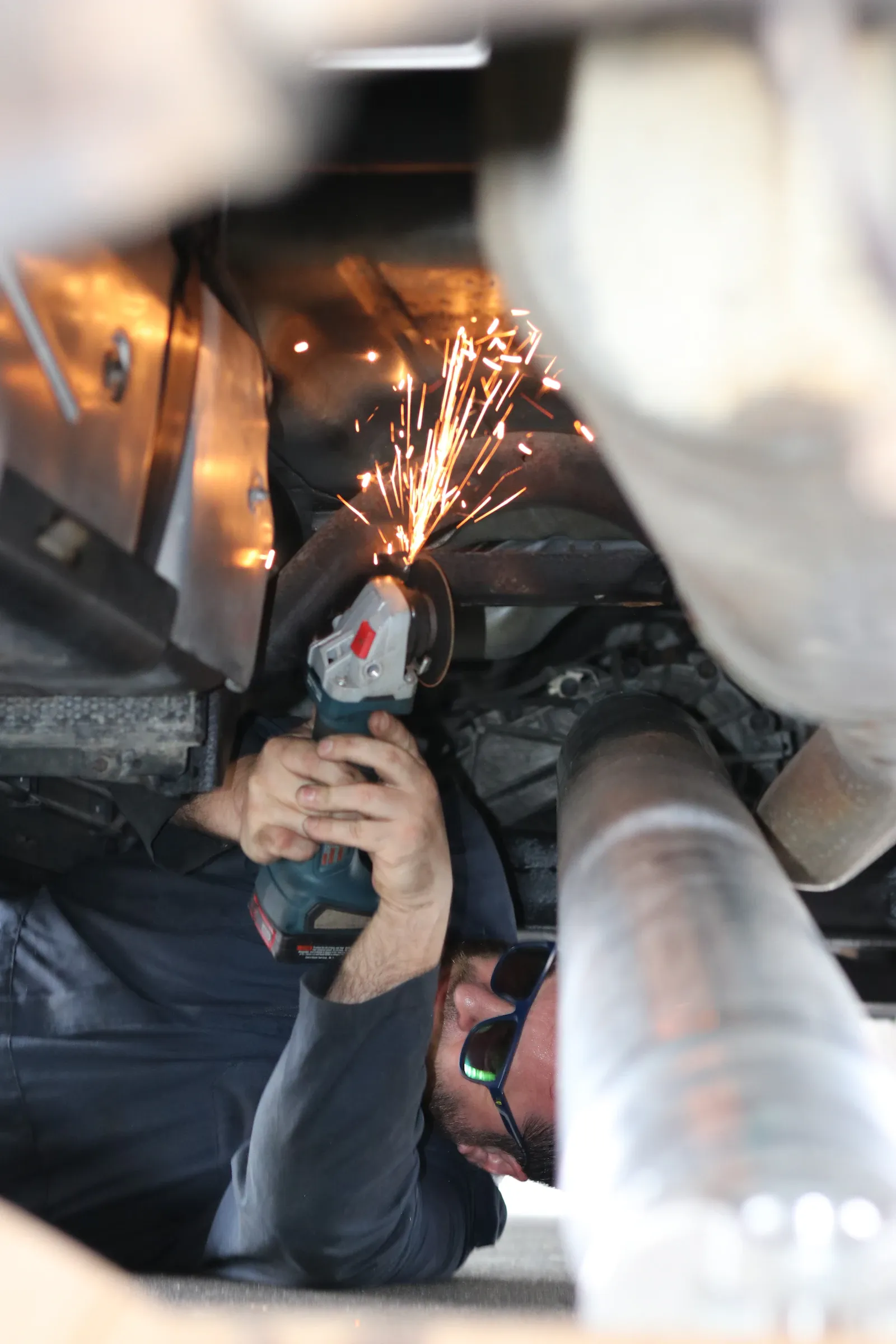
A clunk when selecting Drive or Reverse, stopping, or applying throttle does not prove that the driveshaft needs replacement. The sound can come from normal driveline clearance, a slip-yoke condition, worn joints or supports, loose mounting hardware, or another component. Confirm the source and the exact repair before ordering a shaft.
Describe exactly when the clunk occurs
“Clunk from underneath” is too broad for a parts order. Tell the technician whether the noise occurs:
- When shifting between Park, Reverse and Drive
- Just before the vehicle stops
- As throttle is first applied from a stop
- When throttle is released and reapplied
- During a gear change
- While turning, braking or moving over a bump
- Once per event or repeatedly with shaft speed
These details help separate a load-reversal clunk from a rotating noise, suspension movement or a brake-related sound. A road test and inspection by a qualified technician are more useful than choosing a part from the symptom alone.
Why driveline clearance can make a clunk
Gears and splined connections require operating clearance. When torque changes direction—from acceleration to coast, or from forward to reverse—the accumulated clearance in the transmission, transfer case, universal joints and axle can be taken up quickly.
GM bulletin 99-04-20-002H explains that some clunk can result from the combined free play of multiple driveline components rather than excessive clearance in one part. It also notes that replacing individual components may not eliminate a normal characteristic. That bulletin is general information for covered GM vehicles; it is not a diagnosis for every make or model.
The important buying lesson is simple: ask the shop whether it found a defective component or only heard driveline lash.
Slip yoke, U-joint or complete driveshaft?
Slip-yoke movement
A slip yoke or splined sliding joint allows the driveline to change effective length as the suspension and powertrain move. Binding, wear or an application-specific lubrication condition can create a bump or clunk during takeoff or stopping.
For a narrow example, FCA bulletin 03-004-22 covers certain 2021–2022 Ram 1500 trucks with the 6.2-liter supercharged V8 and specified driveshaft part numbers. Its repair procedure confirms the symptom and services the slip-yoke splines. That remedy should not be applied to other vehicles without the correct service information.
Universal joint or CV joint
A technician should inspect joints for looseness, binding, damaged boots, loss of lubrication where applicable, rust trails around bearing caps and damaged retaining hardware. A joint problem may be serviceable separately on one shaft but may require a larger assembly on another.
Do not judge a joint solely by whether it moves by hand after removal. The applicable inspection method, allowable play and serviceability depend on the design.
Center support bearing and flexible coupling
Multi-piece driveshafts may use a center support bearing, rubber support, flexible coupling or CV joint. Torn rubber, a loose bracket, bearing roughness or coupling damage can transmit a knock that seems to come from the shaft tube.
Ask whether the proposed used assembly includes these pieces and whether the installer intends to reuse any original components.
Shaft tube, flanges and balance features
A dented tube, missing balance weight, damaged flange, bent yoke or excessive runout can justify shaft replacement. The shop should document the defect. A visual inspection can identify obvious damage, but it cannot by itself prove that a shaft is correctly balanced.
When complete replacement may be appropriate
A complete driveshaft can be the right repair when the shaft is bent or dented, a welded yoke is damaged, a non-serviceable joint has failed, the splines are worn, or an application-specific manufacturer procedure calls for an updated assembly.
Toyota bulletins for certain 2005–2013 Tacoma and 2007–2013 FJ Cruiser configurations describe a stop-and-launch clunk and specify improved rear propeller-shaft assemblies for the covered vehicles. The bulletins use model year, drivetrain, transmission, wheelbase or production VIN boundaries. They demonstrate why exact applicability matters; they do not establish that every Tacoma, FJ Cruiser or similar symptom needs a shaft.
What to ask the repair shop before buying
Request a written diagnosis that answers:
- Which shaft is involved: front, rear or intermediate?
- Which component is actually defective?
- Was the clunk reproduced on a road test or hoist inspection?
- Is the condition normal lash, a serviceable joint or support, or a failed shaft?
- Are the transmission, transfer case, differential mounts and axle connections secure?
- Is an OEM bulletin applicable to the full VIN and build date?
- Does the repair require a new or updated part number?
- Which attached parts will be reused?
If the concern is vibration rather than a single load-change clunk, use a different diagnostic path. The guide on driveshaft vibration diagnosis covers speed-related vibration, joints, angles and support bearings.
Used-driveshaft fitment checklist
Once replacement is confirmed, match more than year, make and model. Use the VIN decoder to organize vehicle details, then have the installer verify the original label, shaft position, transmission, drivetrain, wheelbase and end connections.
Before approving a used shaft, confirm:
- Front, rear or intermediate position
- Two-wheel drive, four-wheel drive or AWD
- One-piece or multi-piece construction
- Original part number and documented interchange
- Wheelbase, cab and bed configuration where relevant
- Measurement method and reference points
- Flange, yoke, spline and pilot design
- Bolt pattern and joint type
- Center support bearing or coupling location
- Included joints, brackets, boots and hardware
- Absence of dents, deep corrosion and damaged balance weights
- Packaging that protects the full shaft during shipment
The existing used-driveshaft fitment guide explains measurement and end-connection checks in more detail.
Quick answers
Can a bad U-joint cause a clunk?
Yes, excessive play or binding in a universal joint can cause a clunk, but the joint must be inspected. A clunk alone does not identify the joint.
Does a clunk when shifting into gear mean the differential is bad?
Not necessarily. Torque reversal can take up clearance across several driveline components. The source must be isolated before ordering a differential or driveshaft.
Can lubricating a slip yoke fix the noise?
Only when the applicable service procedure identifies that condition and specifies the correct lubricant and method. Do not treat an application-specific bulletin as a universal repair.
Should a used driveshaft be balanced before installation?
Ask what inspection or testing the supplier performed and have the installer inspect the actual shaft. If damage, missing weights or runout is suspected, follow the applicable professional testing and service procedure.