Car Maintenance & Repair · Oct 14, 2026
Is the Driveshaft Causing the Vibration? What to Diagnose Before Buying
Driveline vibration does not always mean the driveshaft is bad. Learn what to diagnose before ordering a shaft, U-joint, or center support.
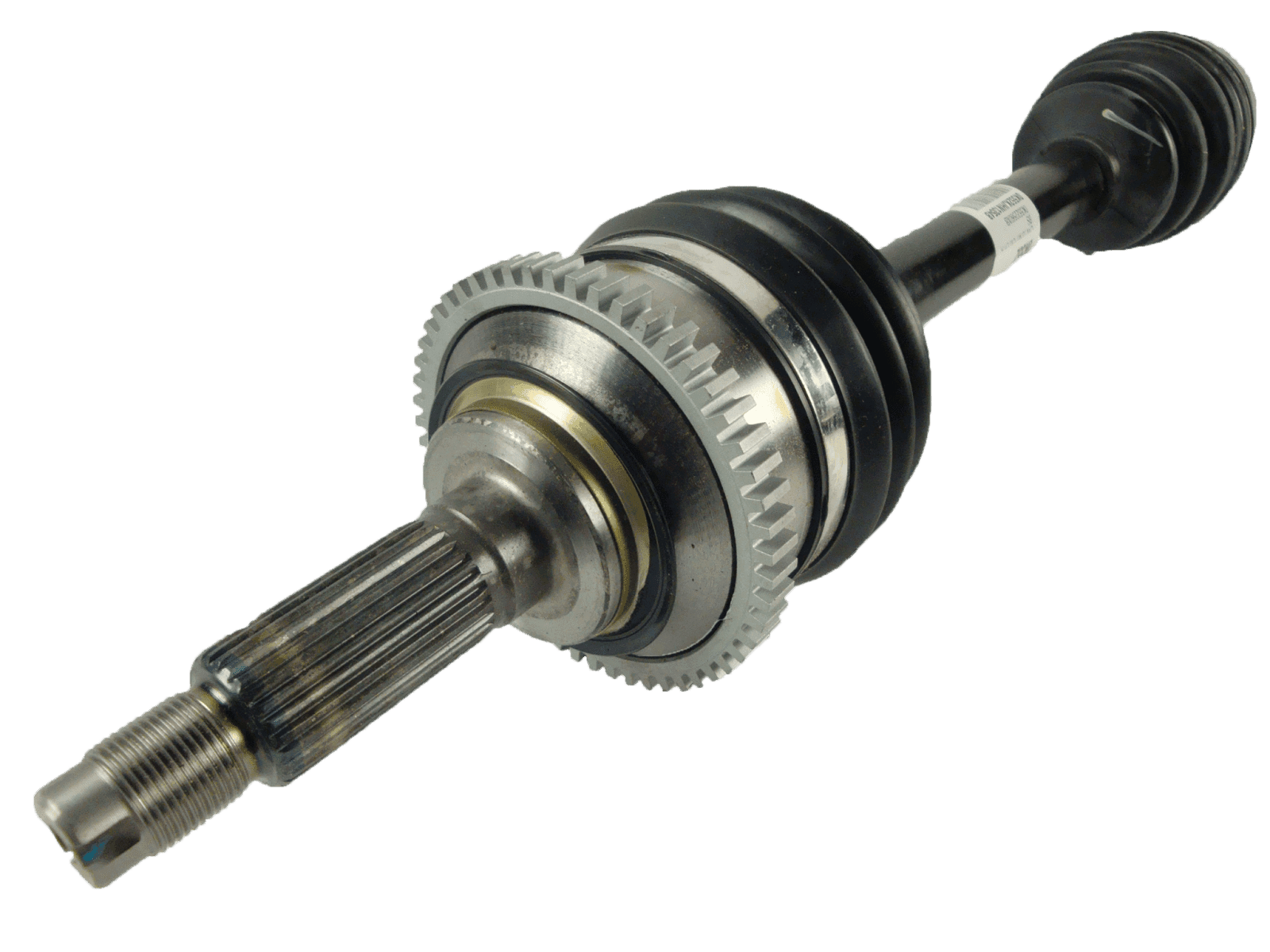
A vibration under acceleration or at highway speed does not automatically mean the complete driveshaft needs replacement. Before buying a used shaft, identify when the vibration occurs and inspect the universal joints, CV joints, center support, slip connection, mounts, operating angles, wheels, axles, and related driveline components.
Start with the vibration pattern
The conditions that produce the vibration are useful diagnostic evidence. Ask the repair shop to document whether it changes with:
- Vehicle speed
- Engine speed
- Acceleration, steady throttle, or deceleration
- Gear selection
- Two-wheel-drive, four-wheel-drive, or all-wheel-drive operation
- Suspension height or vehicle load
- A recent lift, lowering, collision, towing event, or driveline repair
- A change in tires, wheels, mounts, or suspension parts
A vibration tied closely to vehicle speed may involve a rotating road-speed component, but that category includes tires, wheels, hubs, axles, differentials, driveshafts, and related joints. A vibration tied to engine speed can point elsewhere. Diagnosis should isolate the source rather than rely on one symptom.
Inspect the shaft and joints before ordering
A qualified technician should examine the driveshaft for dents, bends, cracked welds, missing balance weights, corrosion damage, contact marks, and improper prior repairs. The inspection should also cover:
- Universal joints for looseness, binding, rust, or damaged seals
- CV joints for play, torn boots, grease loss, or rough movement
- Slip yokes and splines for wear or seizure
- Flanges, pilots, and bolt holes for damage
- Center-support bearing and rubber isolator on multi-piece shafts
- Mounting bolts and straps
- Transmission, transfer-case, and differential mounts
- Output and pinion flanges for runout or looseness
- Evidence that the shaft has contacted an exhaust or chassis component
Do not crawl under a vehicle supported only by a jack. Driveshaft inspection and runout measurement should be performed with appropriate lifting and safety equipment.
U-joint, CV joint, or complete shaft?
The correct repair depends on the design and damage.
A serviceable universal joint may be replaceable when the tube, yokes, splines, and balance remain suitable. Some shafts use staked, bonded, or otherwise non-serviceable joints, so the complete assembly may be the practical service part.
A driveshaft CV joint may be available separately on some applications, while other designs are serviced as an assembly. A failed center-support bearing may also be replaceable, but its rubber support, shaft phasing, balance, and companion joints must be considered.
A complete used driveshaft becomes more relevant when the tube is bent or dented, a welded yoke is damaged, splines are worn, a joint failure has damaged the assembly, or the original design does not support the needed component repair. The repair shop should establish the serviceable scope before a quote is requested.
Check operating angles and vehicle modifications
Universal joints operate through angles created by the transmission or transfer case, driveshaft, and differential. Dana/Spicer technical guidance defines a U-joint operating angle as the relationship between the slopes of connected driveline members and warns that excessive operating angle can reduce joint life and cause vibration.
The exact acceptable geometry depends on the driveline design. A suspension lift or lowering kit, collapsed mount, worn spring, altered axle position, or incorrectly installed center support can change the angles even when the shaft itself is straight.
Replacing the shaft without correcting the geometry may leave the vibration unchanged. Ask the technician to measure the relevant slopes and calculate actual operating angles using the procedure for that vehicle and joint type.
Phasing and assembly position matter
On many multi-joint shafts, the yokes must maintain the intended relationship, often described as phasing. A slip section assembled in the wrong orientation can create a speed fluctuation and vibration. Factory marks, keyed splines, master splines, or service-manual instructions may control alignment.
Multi-piece shafts can also have a specified center-support position, preload, or installation sequence. Marking flanges before removal may preserve the original orientation, but the manufacturer’s service procedure should decide how the assembly is installed.
Rule out tires, wheels, hubs, and mounts
A road-speed vibration can be misdiagnosed as a driveshaft problem. Before ordering, confirm that the inspection has considered:
- Tire damage, uneven wear, or out-of-round condition
- Wheel balance and wheel runout
- Wheel-bearing or hub play
- Bent axle shafts or damaged CV half shafts
- Engine, transmission, and differential mounts
- Pinion, transfer-case, or transmission output bearings
- Brake components that bind or vary in thickness
- Mud, ice, or debris attached to rotating parts
The goal is not to replace every suspected part. It is to use inspection and measurement to identify the component responsible.
Match the used driveshaft after diagnosis
Once complete-shaft replacement is justified, start with the 17-character VIN and confirm the vehicle through the VIN decoder. Then record the drivetrain, transmission, transfer case, axle, wheelbase, cab or body configuration, shaft position, and whether the assembly is one-piece or multi-piece.
Measure only by the method requested by the supplier or driveline shop. Different businesses may measure between seal surfaces, flange faces, joint centers, or collapsed slip positions. Provide photographs of both ends, joints, flanges, labels, balance weights, and center support.
Ask for current photos of the actual used unit and a written statement of included joints, flanges, slip sections, center support, brackets, and hardware.
Driveshaft vibration buying checklist
Before approving an order, verify:
- The vibration conditions and road speed are documented.
- Tires, wheels, hubs, axles, mounts, and related components were considered.
- The shaft was inspected for bends, dents, runout, missing weights, and contact.
- U-joints, CV joints, splines, and the center support were checked.
- Operating angles and vehicle-height changes were evaluated.
- The correct repair scope—joint, support, or complete shaft—is established.
- VIN, drivetrain, transmission, transfer case, axle, wheelbase, and body configuration are recorded.
- Length and end connections were measured by the supplier’s method.
- Included components and the condition description are in writing.
- Installation, balance, return, and warranty requirements are understood.
Review the warranty policy and retain the diagnosis, photos, quote, and installation records. When the specifications are ready, submit them with the parts quote request.
Frequently asked questions
Does vibration at 60 mph prove the driveshaft is unbalanced?
No. Speed-related vibration can also come from tires, wheels, hubs, axles, joints, mounts, or other rotating components. Inspection and measurement are needed.
Can only the U-joint be replaced?
Sometimes. It depends on whether the joint is serviceable and whether the shaft, yokes, splines, and balance remain suitable. Some assemblies require complete-shaft replacement.
Can a suspension lift cause driveshaft vibration?
It can change driveline operating angles and shaft travel. Whether it causes the vibration depends on the vehicle, lift, geometry, and joint design.
Does a used driveshaft need balancing?
A used assembly should be inspected for damage and verified for the application. Whether it requires balance testing or correction depends on its condition, the installation, and the driveline specialist’s findings.