Car Maintenance & Repair · Oct 18, 2026
Differential Leak: Seal, Vent or Complete Assembly?
A differential leak may need a seal or vent repair—not a complete unit. Learn what to diagnose and verify before ordering.
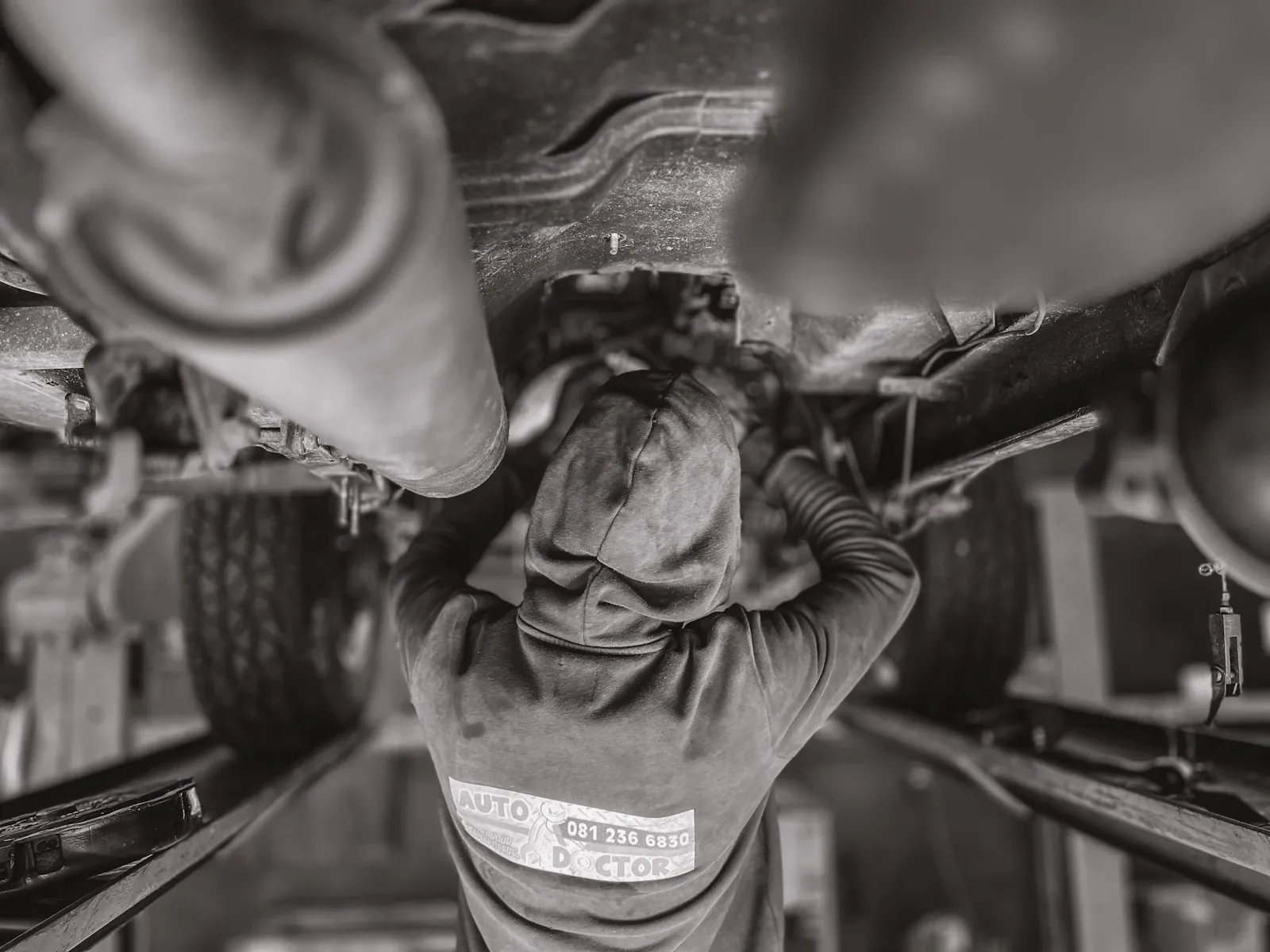
A differential leak does not automatically require a complete replacement assembly. Many leaks begin at a serviceable pinion seal, axle seal, cover gasket, plug or vent. A full differential or axle assembly is more likely to be justified when the housing is damaged or bearing and gear damage is confirmed.
Find the source before choosing a part
Fluid spreads while the vehicle moves. Airflow can push it rearward, and a rotating flange or axle can sling it across the housing. The lowest wet point is therefore not always the source.
A technician should clean the assembly, verify the fluid type and trace fresh leakage to its highest point. The inspection should include:
- Pinion seal and pinion flange area
- Axle-tube and axle-shaft seals
- Differential cover or carrier joint
- Fill and drain plugs
- Vent cap, hose and breather path
- ABS or wheel-speed-sensor openings where applicable
- Housing seams, welds and impact areas
- Nearby engine, transmission or transfer-case leaks
Nissan bulletin NTB24-007 for 2016–2024 Titan and Titan XD vehicles makes the repair-versus-replacement distinction explicit: identify and repair the leak source where possible, and do not replace the rear final-drive assembly unless bearing, gear or other significant damage has occurred. The bulletin is specific to those models, but its diagnostic logic is useful for any buyer discussing a leak with a shop.
Common leak points and what they can mean
Pinion seal
The pinion seal sits where the driveshaft flange or yoke enters the differential. A wet pinion area can indicate a seal problem, but the shop should also inspect the sealing surface, flange, bearings and pinion movement.
Ford service message SSM 47903 for certain 2018–2019 F-150, F-Super Duty and Transit vehicles warns that apparent seepage on a very new vehicle may be residual assembly lubricant. Its procedure calls for cleaning, inspecting and rechecking before declaring the seal failed. That procedure applies only to the vehicles covered, but it demonstrates why a wet area should be confirmed as an active leak.
Pinion-seal work can affect bearing preload on some designs. It should follow the manufacturer’s service procedure rather than a generic tightening method.
Axle seal
Fluid near a wheel or inside a brake area may come from an axle-shaft or wheel-bearing seal. The technician should determine whether the shaft sealing surface, bearing or housing bore is also damaged. Replacing only the seal may not solve a leak caused by another worn part.
If the leak is concentrated at the axle end, the guide on axle seal, shaft and housing diagnosis helps distinguish a local repair from a larger axle-assembly decision.
Cover gasket or carrier joint
A removable rear cover can leak at its gasket or sealant joint. Other differential designs use a carrier-to-housing joint instead. Confirm that the flange is not bent, corroded or cracked and that the fasteners and sealant procedure match the service information.
Do not assume that adding sealant over the outside will provide a lasting repair. The sealing surfaces normally need proper preparation.
Vent or breather
A differential heats and cools in service, so it needs a working vent. A restricted vent can contribute to pressure buildup, while some application-specific conditions can expel fluid through the vent.
Mazda bulletin 03-003/13 addresses an occasional rear-differential vent-cap leak on certain 2011 Tribute AWD vehicles in subfreezing temperatures and specifies an updated vent after confirming that source. Ford service message SSM 51098 addresses vented fluid on specified 2021–2022 Explorer Timberline vehicles and directs technicians to distinguish seal leakage from venting and verify that the vent tube is clear.
These are model-specific examples—not universal instructions to replace a vent or change fluid additives.
Cracked or damaged housing
Impact damage, a cracked case, damaged mounting point, worn bearing bore or failed structural joint may make complete-assembly replacement appropriate. Ask the shop to photograph and document the damage, especially when a housing failure is the reason for buying a used unit.
When a complete differential may be justified
Replacement becomes more reasonable when diagnosis confirms:
- Broken, chipped or severely worn gears
- Bearing damage with metal contamination
- Excessive play caused by internal damage
- A cracked housing or damaged bearing bore
- A damaged mounting point or structural case section
- A non-serviceable internal component failure
- Repair labor and required parts that make an assembly replacement the practical option
A leak alone does not establish any of these conditions. Ask whether the lubricant was drained and inspected, whether abnormal noise or play was found, and whether the housing itself is sound.
If the complaint includes noise, read the separate guide on differential whine diagnosis. A wheel bearing, tire or another driveline component can imitate differential noise.
Questions to ask the repair shop
Before contacting a seller, request written answers to these questions:
- What is the exact leak source?
- Is it an active leak, residue or light seepage?
- Which fluid was identified?
- Is the vent open and correctly routed?
- Are the pinion flange and axle sealing surfaces usable?
- Is there bearing play, roughness or abnormal noise?
- Was metal found in the lubricant?
- Is the housing cracked or otherwise damaged?
- Does the shop recommend resealing, rebuilding or replacing?
- Which original components will be reused?
A clear diagnosis prevents ordering a complete unit for a repairable seal and also avoids installing a replacement without correcting a blocked vent or damaged mating part.
Used-differential fitment checklist
If replacement is confirmed, fitment must be verified beyond year, make and model. Begin with the VIN decoder, then have the installer identify the original assembly and approve the proposed interchange.
Confirm:
- Front or rear location
- Two-wheel drive, four-wheel drive or AWD configuration
- Axle or differential identification code
- Gear ratio
- Open, limited-slip, locking or electronically controlled type
- Housing, carrier or complete axle assembly requested
- Input flange or yoke design
- Output or axle connection details
- Mounting points and sensor provisions
- Included actuator, sensors, cover and brackets
- Correct lubricant and friction modifier, if specified
- New seals, fasteners and installation supplies required
The used-differential fitment guide explains ratio, axle-ID and included-component checks in more detail.
Quick answers
Can a leaking differential be repaired without replacing it?
Often, yes. A serviceable seal, gasket, plug or vent may be repaired if the housing, bearings and gears remain sound. Diagnosis determines the repair.
Is a wet pinion seal definitely bad?
Not always. The area should be cleaned and rechecked for active leakage, and the flange, sealing surface and bearing condition should be inspected.
Can a blocked vent cause leakage?
A restricted breather can contribute to pressure-related leakage. The vent should be checked according to the vehicle’s service procedure, but other leak sources must still be inspected.
Should I drive with a differential leak?
Do not judge remaining lubricant from the size of a spot. Have the fluid level and leak source checked promptly and follow the manufacturer’s guidance; insufficient lubrication can damage gears and bearings.