Car Maintenance & Repair · Oct 23, 2026
Wheel Moves In and Out: Axle Shaft, Hub or Complete Assembly?
In-and-out wheel movement can come from a hub, bearing, shaft, retainer or axle housing. Learn what to verify before buying parts.
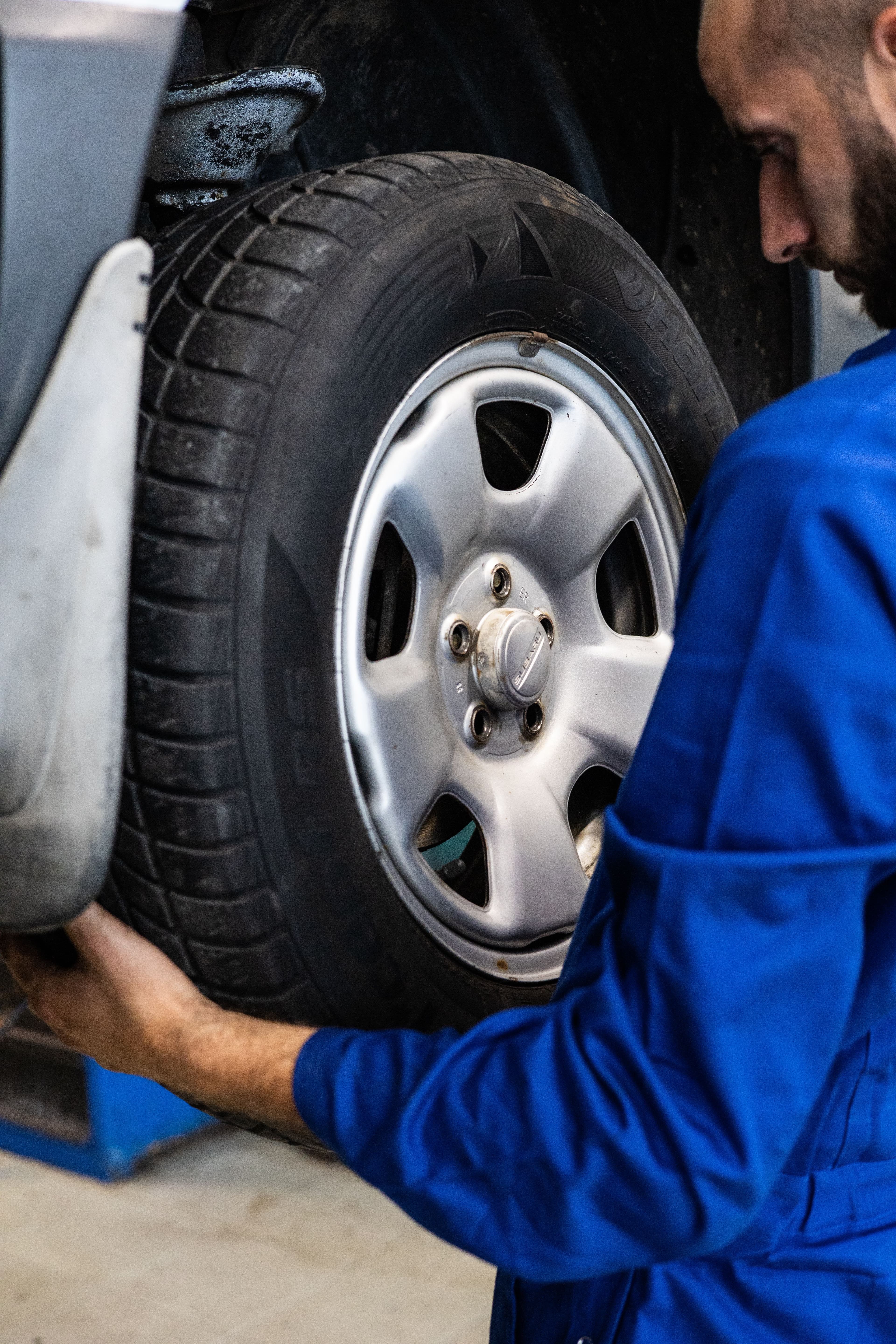
A wheel that visibly moves in and out needs prompt inspection, but it does not automatically mean the complete axle assembly is bad. The movement may come from a wheel bearing or hub, an axle-shaft bearing, a loose axle nut, a worn shaft or spline, a damaged retainer, or the axle housing. The correct part depends on which component is moving and how that axle retains the wheel end.
If the wheel wobbles, grinds, leaks lubricant, changes brake-pedal feel, or feels unstable, avoid driving it until a qualified technician checks it. Wheel-end looseness can become a safety issue.
First identify the kind of movement
“Wheel play” is too broad for a parts order. A technician should distinguish among three basic directions:
- In-and-out movement: axial movement parallel to the axle shaft
- Top-to-bottom or side-to-side rocking: often associated with a bearing, hub, ball joint or suspension joint
- Rotational free play: movement through splines, gears, joints and the differential before the opposite component responds
These symptoms can overlap, so the wheel, hub, axle shaft and housing should be observed together. Applying the service brake during a repeat check can also help a technician determine whether the movement is in the hub or farther inward, when the manufacturer’s procedure calls for that comparison.
There is no safe universal end-play number for every vehicle. Some designs permit specified axial movement; others require a different inspection method. Measurements must be compared with the service information for the exact axle and model.
Why the retention design matters
Passenger vehicles, SUVs and light trucks use different wheel-end layouts. A solid rear axle may retain the axle shaft inside the differential, at the housing end, or with a pressed bearing and retainer. Independent suspension normally uses a separate hub bearing and a CV-type half shaft.
That changes both diagnosis and the part required. A loose hub bearing may be repaired at the wheel end without replacing the axle housing. A damaged bearing surface on an axle shaft may require a shaft. Damage to a housing bore, tube, spindle or differential-side retention feature can expand the repair to a complete assembly.
Do not assume that a shaft, hub, bearing and housing are interchangeable terms. Ask the shop to name the failed component and state whether it is serviced separately on the vehicle.
What can cause in-and-out wheel play?
Wheel bearing or hub damage
A worn or incorrectly installed bearing can allow the hub and wheel to move. Evidence may include roughness while rotating, noise that changes with vehicle speed, heat, or movement at the hub relative to the knuckle or axle end.
Bearing preload and axle-nut procedures are design-specific. Nissan’s axle clicking bulletin for certain vehicles shows why exact procedures matter: the bulletin specifies model-dependent axle-nut handling and warns that incorrect tightening can contribute to noise or looseness. Its repair applies only to the listed vehicles, but the diagnostic lesson is broader—do not reuse its torque value or remedy on another model.
Axle-shaft bearing or worn shaft surface
On some solid axles, the bearing runs on or closely supports the axle shaft. A damaged bearing, worn shaft journal or damaged retainer can create movement and noise. If the shaft’s bearing surface is worn, installing only a new bearing may not correct the underlying fit.
Retention hardware or spline concern
Clips, snap rings, retainers, nuts and splined interfaces vary by design. Missing, damaged or incorrectly seated retention hardware can allow abnormal movement. This is not a visual guess: the axle must be inspected according to the manufacturer’s disassembly and measurement procedure.
Housing or spindle damage
A bent tube, worn bearing seat, damaged spindle, distorted housing end or collision damage can prevent a new bearing or shaft from holding alignment. When the housing is the failed structure, a complete axle assembly may be more practical than stacking smaller repairs onto a damaged foundation.
Normal driveline free play mistaken for wheel-end play
Rotational movement through the differential is different from axial movement of the wheel and hub. Gear lash and spline clearance can produce a clunk without the wheel end being loose. The technician should identify the direction of movement before recommending parts.
What a useful inspection should document
Ask for findings you can use to buy the correct part:
- Which wheel and axle location are affected
- Whether the hub, axle shaft or entire housing moves
- The direction and measured amount of movement
- Whether the bearing feels rough or noisy
- Whether lubricant or brake contamination is present
- The condition of the axle shaft, splines and bearing surface
- The condition of the housing bore, tube or spindle
- Any damaged retention hardware
- Whether collision damage, overloading or prior repair is evident
- The exact component the shop wants replaced
A dial indicator or other manufacturer-specified method may be required. A safety investigation filed with NHTSA for certain wheel-end bearings described end play, noise, vibration and wheel wobble as possible warnings before wheel-end loss. That report concerns a specific component population, not every vehicle, but it reinforces why visible looseness should not be ignored or diagnosed only by sound.
Shaft, hub or complete axle assembly?
Choose the repair scope from the failed structure.
A hub or wheel-bearing repair may be appropriate when the looseness is isolated to a separately serviced hub or bearing and its mounting surfaces are undamaged.
An axle-shaft repair may be appropriate when the housing is sound but the shaft, splines, bearing journal or shaft-mounted retention components are damaged.
A complete axle assembly may be appropriate when the housing, tube, spindle, differential-side retention area or multiple internal components are damaged, or when the shop’s repair plan calls for a matched assembly.
Before shopping, use the iBid parts search to confirm that axle assemblies are listed for the vehicle family. Inventory categories are not fitment approval; the installer still needs to verify the offered unit.
Axle-assembly fitment checklist
A complete axle that looks similar can still be wrong. Collect:
- Full VIN, year, make, model and drivetrain
- Front or rear axle location
- Two-wheel-drive, four-wheel-drive or all-wheel-drive configuration
- Axle tag, code, casting and original part-number photos
- Gear ratio
- Open, limited-slip, locking or electronically controlled differential type
- Brake type and wheel-speed sensor provisions
- Hub pattern and axle-shaft count or configuration
- Suspension brackets and mounting points
- Input flange or yoke style
- Track width or housing dimensions required by the installer
- Included hubs, brakes, sensors, actuators and cables
- Documented interchange or supersession for any different part number
The iBid VIN decoder can help organize vehicle information, but a VIN decode should be combined with the original axle identification and installer confirmation.
When requesting an iBid axle-assembly quote, attach the technician’s findings and clear photos of the original axle tags, housing ends, brackets, brakes and input connection. Ask the installer to approve the proposed interchange before shipment.
Questions buyers often ask
Is a small amount of axle-shaft movement normal?
It can be on some designs, but the allowed direction and amount are vehicle-specific. Have the movement measured and compared with the correct service specification.
Can a bad wheel bearing damage the axle shaft?
Depending on the design and severity, bearing damage can affect the shaft surface, hub or housing. Inspection should cover all mating surfaces before new parts are ordered.
Does wheel play always require a complete axle assembly?
No. A bearing, hub, shaft or retainer may be serviced separately. A complete assembly makes more sense when the housing or several related components are damaged or the installer specifies assembly replacement.
Can I match an axle by VIN alone?
The VIN is useful, but axle codes, gear ratio, differential type, brakes, sensors, brackets and original part numbers should also be confirmed.
Buy only after the movement is localized
The key question is not simply whether the wheel moves. It is whether the movement is at the hub, axle shaft, retention hardware or housing. Once the shop documents that location and the required axle configuration, a buyer can choose a hub, shaft or complete assembly without paying for the wrong repair scope.