Car Maintenance & Repair · Oct 12, 2026
Transfer Case or Shift Motor? What to Confirm Before Buying a Replacement
A 4WD warning does not identify the failed part. Learn what to ask your shop before ordering a transfer case, shift motor or related assembly.
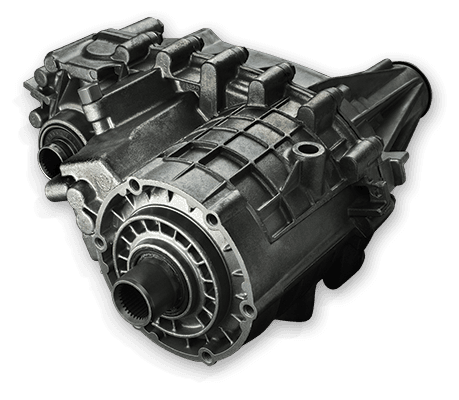
A four-wheel-drive warning is a reason to diagnose the system, not enough information to order a complete transfer case. Ask the repair shop to identify whether the fault involves the mechanical assembly, its shift hardware, electrical controls or another part of the driveline. Then order the specific component the repair requires.
This distinction matters because a used transfer case and a replacement shift motor are different purchases. A quote for one does not automatically include the other.
What a transfer case and a shift motor do
The transfer case is a driveline assembly used in certain four-wheel-drive and all-wheel-drive layouts. Its design and operating modes depend on the vehicle. A shift motor, where fitted, operates the mechanism that changes the transfer case’s selected range or mode; it is not the complete case.
Do not assume every AWD vehicle uses the same arrangement. BorgWarner’s drivetrain overview distinguishes AWD couplings from transfer cases and describes both one-speed and two-speed designs, with different control arrangements. That variation is why the phrase “AWD unit” needs clarification on a parts quote.
Ask the shop to name the assembly it diagnosed and the replacement it recommends. “The four-wheel drive does not work” describes a complaint, rather than a parts specification.
Read the warning in the context of your vehicle
Write down the exact dashboard message and when it appears. Does it occur during a mode change, after extended use, or immediately on startup? Give the shop those observations without treating them as a diagnosis.
For an example of why wording matters, Ford’s four-wheel-drive message guidance describes different messages for temporary overheating protection, system faults and lubricant service. These meanings apply to the covered vehicle configuration, not automatically to every Ford or other make.
Consult the manual for your exact vehicle and follow its service instructions. A message about a system fault does not, by itself, prove that the entire transfer case must be replaced.
Ask for a clear repair recommendation
Before contacting a seller, ask the technician to put the recommendation in writing. The useful distinction is between a confirmed repair and a component being considered during troubleshooting.
Request answers to these questions:
- Which component has been identified as faulty?
- What inspection or diagnostic results support that conclusion?
- Is the proposed repair a complete assembly replacement or a separate component repair?
- Which existing components will be reused?
- Does the repair require any vehicle-specific setup or additional parts?
- Is there an unresolved condition that could affect the replacement?
You do not need to interpret every scan result yourself. You do need enough clarity to avoid buying a full assembly when the shop has requested only a separate component.
Define exactly what arrives in the shipment
A listing photo may show hardware that is not included with the quoted assembly. Request photos of the actual unit and a written included-parts description.
Have the installer confirm the identity of the replacement using the VIN, original assembly markings and appropriate application information. The iBid VIN decoder can help collect vehicle details; it does not replace assembly-specific fitment confirmation.
Ask the seller whether the quote includes a shift motor, sensors, brackets or other attached hardware. If the shop plans to reuse a component, check that this is reflected in the repair estimate. If a quoted part number differs from the original, have the shop verify the interchange before shipment.
This article does not establish compatibility for a particular model year, transmission or drivetrain configuration.
Compare assembly cost with the full job
Keep the parts price separate from shipping, labor, fluids, seals and any required setup. Ask the shop which installation supplies it needs and which items are already included in its estimate.
Read the current iBid return policy and obtain the terms applicable to the order before payment. Ask how a fitment concern should be reported, whether installation affects return eligibility and who is responsible for return freight. Do not infer these terms from another seller’s listing.
When you request a parts quote, include the exact component requested by the shop, vehicle details, original markings and delivery location. A precise request makes quotes easier to compare.
Quick answers before ordering
Should I buy a transfer case because the 4WD light is on?
Not on that observation alone. Have the system diagnosed and obtain a specific repair recommendation.
Does a used transfer case always include the shift motor?
No inclusion should be assumed. Ask the seller to list the supplied hardware in writing.
Can I order using only year, make and model?
Start with those details, but also provide the VIN and original assembly identification. Have the installer confirm the proposed unit.
What is the most useful question to ask the shop?
“Are we replacing the complete transfer case, or a separate component that operates it?” Resolve that question before approving the parts order.