Car Maintenance & Repair · Oct 19, 2026
Limited-Slip Differential Chatter: Fluid Service or Replacement?
Learn why limited-slip differentials can chatter on tight turns and what to verify before buying a replacement assembly.
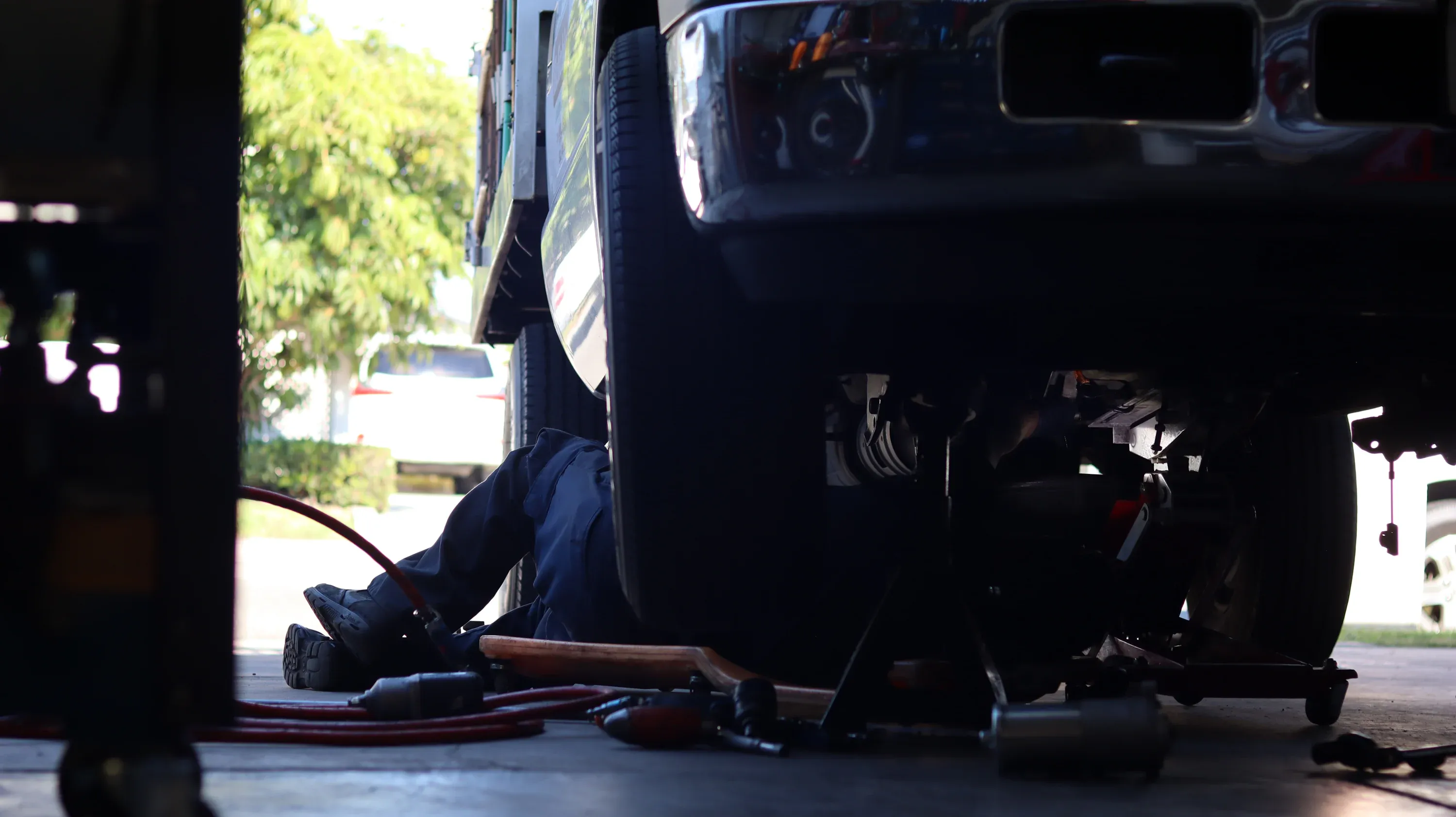
Rear-end chatter, clicking or a jerking sensation during slow, tight turns does not automatically mean the differential assembly needs replacement. On vehicles with a clutch-type limited-slip differential, incorrect, degraded or improperly serviced gear lubricant can make the clutch packs slip and stick. Confirm the axle type, reproduce the symptom and follow the exact manufacturer procedure before ordering a differential.
What limited-slip chatter usually feels like
Drivers often describe several sensations as “differential noise.” Limited-slip chatter has a more specific pattern:
- It appears during low-speed, tight turns.
- The sound comes from the driven axle area.
- A clicking, chatter or clunk may occur with a jumping or binding sensation.
- It may be more noticeable when the vehicle is cold or after axle service.
- Straight-line driving may feel normal.
That pattern is different from a steady whine that changes with vehicle speed, a single clunk when drive direction changes, or a wheel-bearing growl that changes as the vehicle is steered. The distinction matters because each points toward a different diagnostic path.
Why fluid can change limited-slip behavior
A clutch-type limited-slip differential uses friction elements to control the speed difference between the two axle shafts. The lubricant must satisfy the axle manufacturer’s viscosity, performance and friction requirements. An incorrect product, missing required modifier, mixed fluids or overdue service can change how the clutch surfaces engage.
Manufacturer bulletins show that this is not merely theoretical. General Motors documented rear-axle clunk or chatter on turns for specified Cadillac models equipped with the G80 limited-slip differential and directed technicians to replace the lubricant with the listed limited-slip gear oil. Isuzu’s January 2025 information for certain N-Series trucks links tight-turn clicking or chatter to missing limited-slip additive or degraded axle fluid and prescribes a vehicle-specific fluid-and-additive procedure. Ford has also published guidance for specified Dana 70 and Dana 80 Trac-Lok applications where, after normal diagnosis identifies clutch chatter, the technician adds a friction modifier meeting Ford’s stated specification.
Those procedures are not interchangeable. The oil grade, quantity, additive requirement and follow-up road test vary by axle and vehicle. Some approved fluids already contain friction modifier; adding more without instructions can be wrong. Never copy a quantity or product from a bulletin for a different axle.
Checks to complete before changing fluid
First verify that the vehicle actually has a limited-slip differential. A badge or seller description may be incomplete. Use the VIN, build data, axle tag or stamp, option code, differential identification and current service information.
Then ask the technician to inspect:
- Whether the noise can be reproduced during the specified low-speed turning maneuver.
- Whether it comes from the front or rear axle and from the differential rather than a CV joint, wheel bearing, brake or suspension part.
- The lubricant level and evidence of leakage.
- The fluid’s appearance and any metal or abnormal debris.
- The service history, including the last oil type and any additive used.
- Tire size, inflation and wear, especially on all-wheel-drive or four-wheel-drive vehicles.
- Axle shafts, CV joints, universal joints, mounts and driveshaft components for play or damage.
- Diagnostic trouble codes on vehicles with electronically controlled differentials.
- The manufacturer’s current fluid specification and service procedure for the exact axle.
If the fluid contains significant metal, the housing is damaged, bearings are rough, gear teeth are damaged or the unit has measurable wear outside specification, a lubricant service alone is not an adequate repair.
Fluid service or differential replacement?
A fluid-related service is a reasonable first path only when diagnosis identifies limited-slip clutch chatter, the axle matches an applicable procedure, the assembly has no evidence of structural or gear damage and the specified service has not already failed.
A replacement differential becomes more reasonable when inspection confirms damaged gears, bearings, case, carrier, clutch components or electronic hardware that cannot be serviced economically; severe contamination is present; or the symptom persists after the correct diagnostic and repair procedure.
Do not buy a replacement solely because a rear-end sound occurs on turns. GM’s driveline guidance also explains that some clunk during rapid load reversal can reflect accumulated lash across several components rather than one defective differential. A shop should separate tight-turn clutch chatter from normal or excessive driveline lash before recommending a unit.
If replacement is needed, match more than the housing
The used-differential fitment checklist explains why external appearance is not enough. Confirm:
- Front or rear position
- Axle identification, tag, stamp and original part number
- Ring-and-pinion gear ratio
- Open, limited-slip, locking or electronically controlled design
- Two-wheel-drive, four-wheel-drive or all-wheel-drive configuration
- Housing, flange, mounting and connector details
- Included actuator, sensors, cooler or axle components
- Required lubricant, seals and installation hardware
On a vehicle with driven front and rear axles, an incompatible ratio can create driveline binding and damage. The seller and installer should approve the interchange in writing.
Buyer checklist before requesting a differential
Collect the following:
- Full 17-character VIN
- Vehicle build information and axle option code
- Photos of axle tags, labels, stamps and housing
- Confirmed gear ratio and differential type
- Written description of the symptom and test conditions
- Fluid level, specification and service history
- Inspection findings for gears, bearings, shafts and debris
- Codes and electronic-differential test results, if applicable
- Exact assembly or component requested
- List of parts included with the used unit
- Installer’s fluid, seal and calibration plan
- Delivery and core-return requirements
Use the VIN decoder to organize basic vehicle details, then combine them with the original axle identification. When the diagnosis and fitment information are complete, attach them to the parts quote request.
Frequently asked questions
Does chatter on tight turns mean the differential clutches are worn out?
Not necessarily. Incorrect or degraded lubricant can cause similar behavior on some clutch-type limited-slip units. The axle still needs inspection for wear or damage.
Can I add friction modifier to any differential?
No. Use only the product and quantity specified for that exact axle. Some fluids already contain modifier, and some differential designs do not use a clutch additive.
How quickly should chatter disappear after correct service?
The answer is vehicle-specific. Some manufacturer procedures include a prescribed road test or state that clutch surfaces may require operating time before the effect is fully evaluated. Follow the applicable service information.
Is limited-slip chatter the same as transfer-case binding?
No. Both may appear during turns, but they involve different assemblies and require different tests. Tire mismatch and four-wheel-drive operation can also create turning complaints.
Should a used limited-slip differential arrive filled with oil?
Do not assume it will. Shipping practices vary. Ask whether the unit is drained, which openings are capped, and which specified lubricant and installation steps the shop will use.