Car Maintenance & Repair · Oct 23, 2026
Differential Clunk on Throttle Changes: Diagnose Before You Buy
A throttle-change clunk can come from normal driveline lash, a driveshaft joint, mounts or the differential. Learn what to verify before buying.
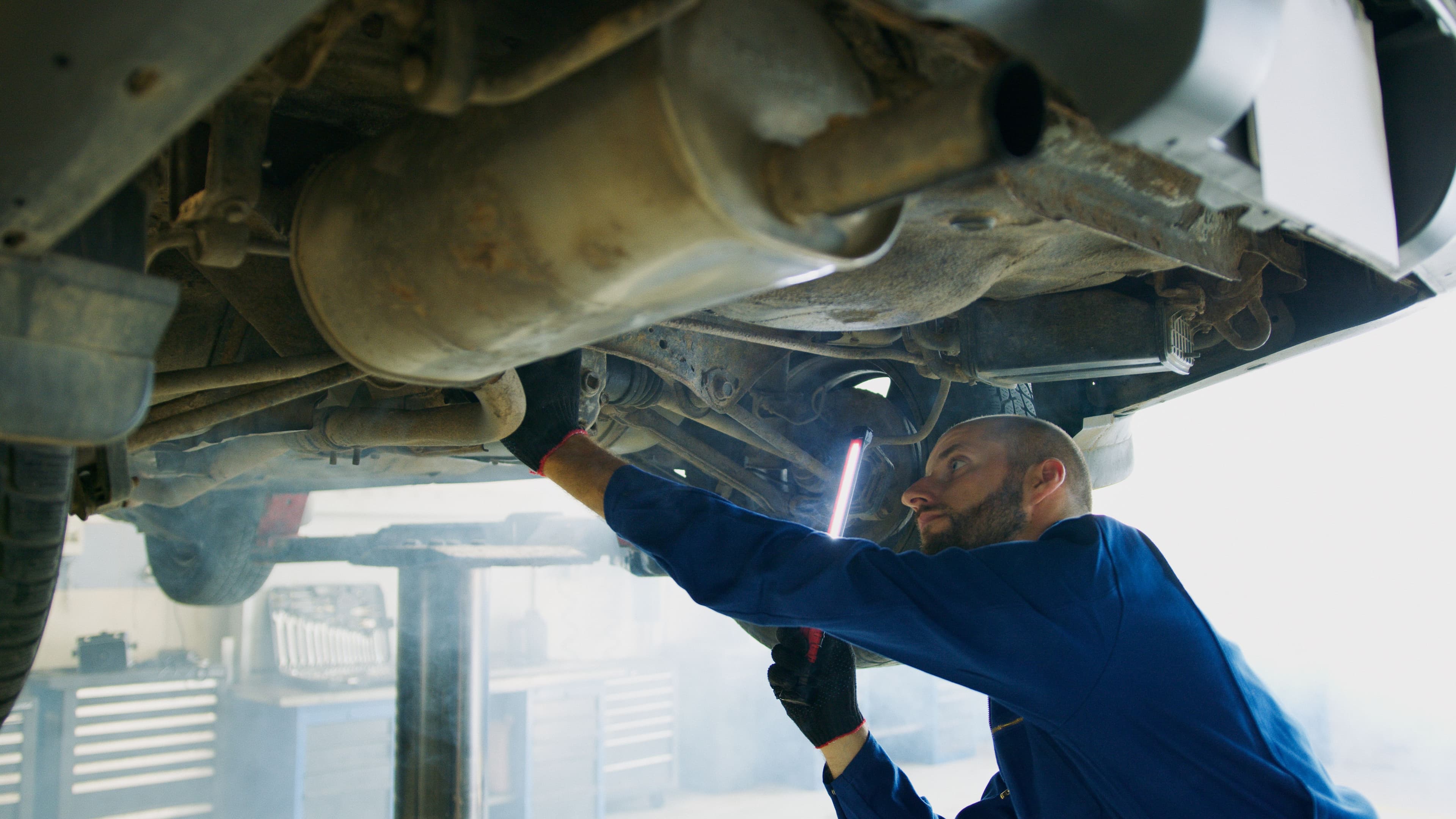
A clunk when the accelerator is applied or released does not, by itself, prove that the differential has failed. The sound can come from normal driveline clearance, a driveshaft slip joint, universal or CV joints, differential mounts, axle splines, or internal final-drive wear. The useful buying decision comes after a technician reproduces the noise and identifies where the movement occurs.
Why load changes create a clunk
When a vehicle changes from coasting to acceleration, torque reverses through the transmission, driveshaft, differential and axle shafts. Each gear mesh, spline and joint needs some operating clearance. The clearances can add together and become audible as the driveline changes from the coast side to the drive side.
General Motors explains this cumulative effect in its driveline clunk bulletin: lash in several components can combine into a clunk, and a four-wheel-drive or all-wheel-drive system can have more contributing interfaces than a two-wheel-drive layout. The bulletin also warns that replacing one component may not eliminate a characteristic created by the whole system.
That makes symptom timing more useful than volume alone. Record whether the clunk occurs:
- When shifting between Reverse and Drive
- When first moving from a stop
- When lifting off and then reapplying the accelerator
- During a gear change
- While braking to a stop
- Over bumps without a throttle change
- During tight turns
A shop should also note whether the noise is felt through the floor, seat or steering wheel and whether it occurs once or repeats.
Differential, driveshaft or mount?
A single road symptom can have several mechanical paths. These distinctions help narrow the inspection.
Cumulative driveline lash often appears when torque reverses. Some clearance is required by design, so the presence of a clunk is not a measurement of differential damage. A technician must compare the observed movement and sound with the manufacturer’s specifications and diagnostic information for that vehicle.
A driveshaft slip joint or spline interface can also clunk as the suspension and driveline move. A Stellantis bulletin for certain 2021–2022 Ram 1500 trucks with the 6.2-liter supercharged V8 describes a takeoff or stopping clunk addressed by servicing the rear propshaft slip-yoke splines. That remedy is limited to the vehicles identified by the bulletin; it illustrates why a driveshaft concern should not be mistaken for a failed differential.
A differential mount or bushing can allow the housing to move when torque changes direction. BMW published a bulletin for specific F80 M3, F82/F83 M4 and F87 M2 vehicles describing a hard rear-axle knock during load reversal and directing technicians to a rear differential mount. Again, that is a model-specific example, not a universal diagnosis.
Internal final-drive damage becomes more plausible when the clunk is accompanied by verified excessive backlash, metal debris, lubricant loss, bearing noise, tooth damage or abnormal movement at the pinion or outputs. Those findings require hands-on inspection.
A practical diagnostic sequence before buying
Ask the repair shop to document the path from symptom to conclusion. A useful inspection generally separates external movement from internal differential condition.
- Reproduce the clunk under controlled conditions and record the exact trigger.
- Check for loose fasteners, damaged mounts and contact marks before condemning an assembly.
- Inspect universal joints, CV joints, slip joints, driveshaft support bearings and axle-spline interfaces as applicable.
- Check the differential lubricant level and condition using the vehicle-specific service procedure.
- Observe movement at the differential housing, input flange and axle outputs while the driveline is loaded safely.
- Measure backlash or other clearances only with the correct service procedure and specifications.
- Confirm whether the noise remains localized to the final drive after external causes are excluded.
This work belongs with a qualified technician using safe lifting and loading procedures. Do not work under a vehicle supported only by a jack or attempt to load the driveline while someone is beneath it.
When replacement becomes a reasonable choice
A used or remanufactured differential becomes a sensible option when diagnosis identifies the final-drive assembly as the source and the repair plan favors assembly replacement over internal rebuilding. The written diagnosis should say more than “rear-end noise.” Ask for the location, observed defect, relevant measurements and the exact assembly requested.
Before shopping, review the used differential fitment checklist. A replacement must match the required axle location, gear ratio, differential type, housing and mounting configuration, flange or yoke arrangement, and any electronic actuator or sensor provisions. On vehicles with driven front and rear axles, ratio compatibility across the driveline is essential.
Use the iBid VIN decoder to organize basic vehicle information, but do not rely on the VIN alone. Photograph axle tags, labels, casting marks and the original assembly. Ask the installer to approve any interchange or superseded part number before shipment.
Differential replacement buying checklist
Send the seller and installer a consistent set of details:
- Full VIN and model year
- Two-wheel drive, four-wheel drive or all-wheel drive
- Front or rear differential location
- Original axle code, tag and part-number photos
- Confirmed gear ratio
- Open, limited-slip, locking or electronically controlled design
- Input flange or yoke style and output arrangement
- Required actuators, sensors, brackets and mounts
- Technician’s diagnosis and any measured clearances
- Photos of the actual replacement unit
- Written list of included and excluded components
- Fluid, seal, programming and calibration requirements from the installer
- Delivery location and handling requirements
When requesting an iBid parts quote, attach the diagnosis and identification photos. That gives the supplier a clearer fitment target and helps the installer compare the proposed unit with the original before installation.
Questions buyers often ask
Is some differential backlash normal?
Yes. Gearsets require operating clearance. The important question is whether the measured clearance and wear pattern meet the service specifications for the exact axle—not whether any free play can be felt.
Does a clunk only on takeoff mean the differential is bad?
No. Takeoff loads the entire driveline. Slip joints, universal or CV joints, mounts, axle splines and accumulated clearance can all contribute.
Can a shop identify the source without removing the differential?
Often, the first diagnostic steps are external: reproducing the event, inspecting mounts and joints, checking lubricant, and observing movement. Removal may be needed if testing points to internal damage.
Should a used differential be ordered by year, make and model?
No. Those details are a starting point. Gear ratio, axle identification, differential type, flange and output configuration, electronics and part-number interchange also need confirmation.
The decision to make
Treat a throttle-change clunk as a driveline symptom, not an automatic differential verdict. If a shop can isolate the final drive and document the required configuration, the buyer can shop for a replacement with much lower fitment risk. If the source remains uncertain, further diagnosis is more valuable than ordering an assembly on sound alone.