Car Maintenance & Repair · Oct 20, 2026
Coolant in Engine Oil: Repair the Leak or Replace the Engine?
Coolant in engine oil is serious, but it does not prove the entire engine has failed. Diagnose the leak path and secondary damage first.
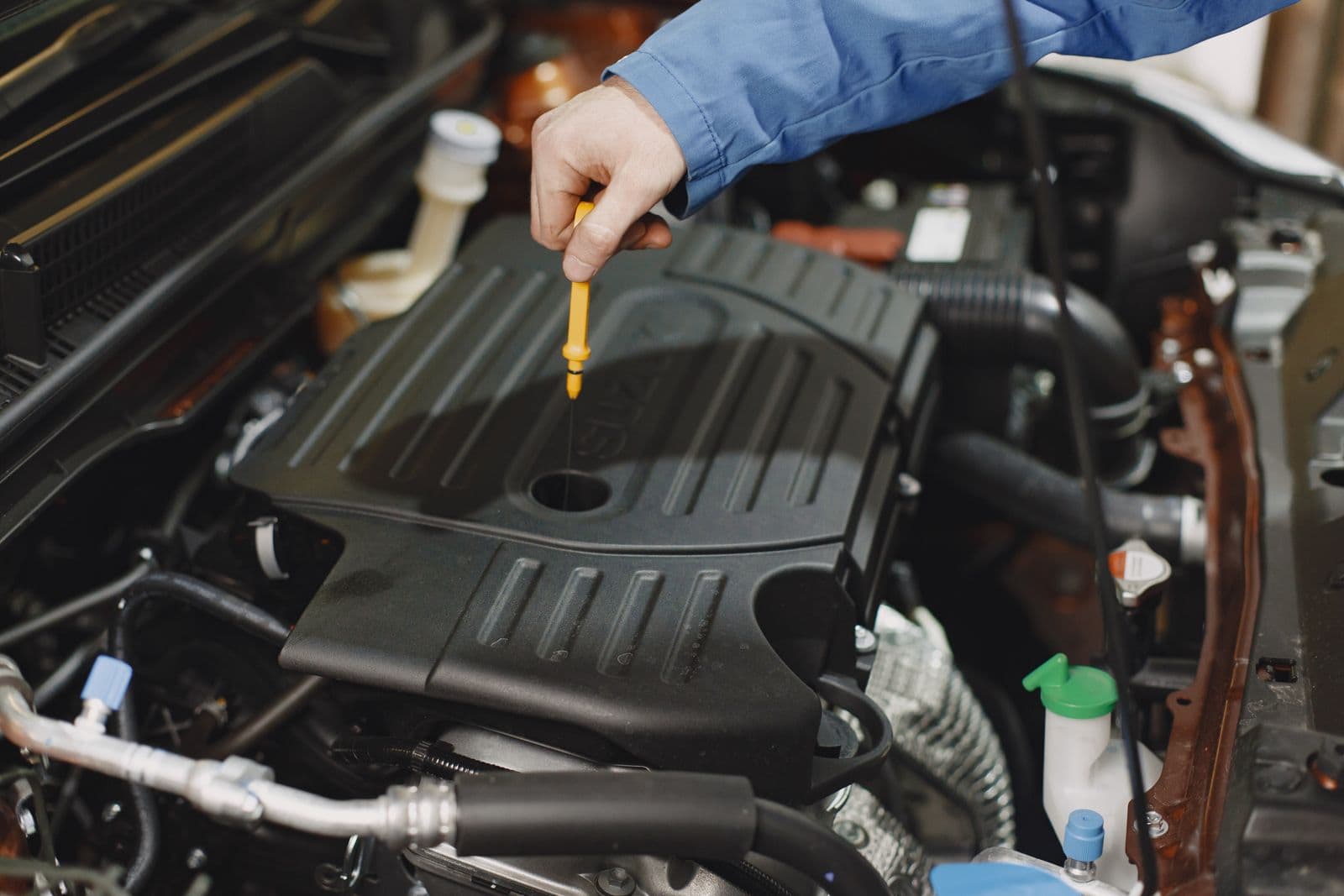
Coolant found in engine oil is serious, but it does not identify the failed part by itself. A leaking oil cooler, failed head gasket, cracked cylinder head, block damage or another vehicle-specific fault can create similar evidence. Confirm the contamination path and check for lubrication damage before deciding between a localized repair and a replacement engine.
First confirm that coolant is actually in the oil
A beige deposit under the oil-fill cap is not conclusive on its own. Short trips and cold weather can create condensation near the cap while the oil in the sump remains normal. A technician should inspect the dipstick and a drained oil sample, compare the oil level with its earlier level, and check the cooling system for unexplained loss.
Evidence that deserves immediate investigation includes:
- Milky or emulsified oil on the dipstick or in the drained oil
- Oil level rising without additional oil being added
- Coolant level falling with no verified external leak
- Cooling-system pressure remaining after a cold soak
- White exhaust vapor that continues after warm-up
- Rough running, misfire codes or coolant in a cylinder
- Low oil-pressure warnings or abnormal bearing noise
- Oil or sludge in the coolant reservoir
Do not keep running an engine simply to see whether the fluids separate. Coolant can reduce the oil film that protects bearings and other loaded surfaces, while a cylinder containing enough liquid can prevent the piston from moving and cause hydrolock.
Head gasket, oil cooler or a damaged casting?
These faults require different repairs, so the source matters more than the appearance of the mixture.
Oil-to-coolant heat exchanger or oil cooler
Some engines use an oil cooler that places pressurized engine oil close to engine coolant. An internal cooler or heat-exchanger leak can allow the fluids to cross without a failed head gasket. BMW service bulletin 11 19 18, for example, documents an engine oil-to-coolant heat exchanger that can contaminate the high-temperature cooling circuit on specified N63R and N63M applications. That bulletin applies only to the listed engines, but it shows why the cooler circuit should be tested before condemning an engine.
Head gasket or cylinder-head fault
A failed gasket, warped sealing surface or cracked head can connect a coolant passage with an oil drain, cylinder or combustion chamber. The evidence may include coolant loss, misfire, combustion gas in the cooling system, low compression or leakage during a cylinder leak-down test. No single symptom proves which of those faults is present.
Block porosity, crack or cylinder intrusion
Manufacturer information also documents application-specific casting and coolant-intrusion faults. GM bulletin 18-NA-072 instructs technicians working on specified engines with oil in coolant to validate whether contamination comes from the oil cooler or from a block passage before replacing components. Ford TSB 19-2346 directs long-block replacement for confirmed coolant intrusion on the identified 2.0L EcoBoost vehicles that meet its model, build-date and symptom criteria. Neither procedure should be generalized to a vehicle outside its stated coverage.
The diagnostic sequence before buying an engine
Ask the repair shop to preserve the evidence before draining, flushing or disassembling anything. A useful inspection plan can include:
- Record warning messages, diagnostic trouble codes and freeze-frame data.
- Photograph fluid levels and contamination in the oil and coolant.
- Pressure-test the cooling system using the vehicle maker’s procedure.
- Inspect the oil cooler or heat exchanger when the design uses one.
- Remove and inspect spark plugs if cylinder intrusion is suspected.
- Use a borescope where appropriate to look for washed cylinders or liquid.
- Perform compression and cylinder leak-down tests when safe and meaningful.
- Check for combustion gas in the cooling system using an approved method.
- Inspect the drained oil and filter for bearing material or other metal.
- Verify oil pressure mechanically if the engine can be operated safely.
The sequence will vary with the engine and symptoms. An engine that is hydrolocked, knocking or showing no oil pressure should not be restarted merely to complete a generic test list.
If overheating preceded the contamination, the related guide on replacing an engine after overheating explains why the radiator, fans, pump, thermostat and the original failure cause must be addressed before another engine is installed.
When a localized repair may be enough
A cooler, gasket or cylinder-head repair may be reasonable when the leak source is confirmed, the block and rotating assembly remain within service limits, and the manufacturer provides a suitable repair procedure. The shop still needs to determine whether contaminated oil circulated long enough to damage bearings, camshafts, timing components, turbocharger bearings or other lubricated parts.
A successful localized repair normally requires more than replacing the leaking component. The technician must clean the affected oil and cooling circuits according to the exact service information, replace filters and fluids as directed, correct any initiating cooling-system problem, and verify stable oil pressure and coolant level afterward.
Avoid universal flushing recipes. Cleaning chemicals, number of flush cycles, thermostat procedures and component replacement rules vary by engine. Oil-contaminated hoses, reservoirs or radiators may require different treatment from coolant-contaminated engine oil.
When replacement becomes the stronger option
A replacement engine becomes more defensible when diagnosis confirms damage that cannot be corrected reliably with a localized repair. Examples include:
- A cracked block or damaged cylinder wall
- A manufacturer-directed long-block replacement for the verified condition
- Severe bearing damage after diluted-oil operation
- Multiple damaged internal components
- A cylinder-head or deck surface outside service limits
- Hydrolock damage to connecting rods or pistons
- Repair scope and machining requirements that exceed a practical rebuild plan
The decision should be based on measured damage and a written estimate, not on “milky oil” alone. Ask whether the proposed part is a used complete assembly, long block, short block or remanufactured engine because included components and installation work differ.
Replacement-engine fitment checklist
Engine displacement and model year are not enough to establish interchange. Before ordering:
- Start with the complete 17-character VIN.
- Match the original engine code and identification marks.
- Confirm build date, fuel type and emissions configuration.
- Verify turbocharged, supercharged or naturally aspirated layout.
- Compare sensors, wiring, mounts, oil pan and accessory provisions.
- Identify which intake, exhaust, fuel and ignition parts will be reused.
- Confirm whether the oil cooler is included or transferred.
- Document required programming, security setup and relearns.
- List new gaskets, seals, filters, fluids and one-time-use fasteners.
- Correct the original coolant-entry or overheating cause before startup.
The VIN decoder can organize basic vehicle information, but the installer should also match the engine code, original part number and current interchange data. When you request a parts quote, include the VIN, engine identification, diagnosis and a written list of the components the shop expects with the assembly.
Quick answers
Can coolant in oil be fixed without replacing the engine?
Sometimes. A confirmed oil-cooler or gasket fault may be repairable if inspection shows no secondary internal damage. A cracked block, severe bearing damage or a manufacturer-directed long-block repair can justify replacement.
Does milky residue under the oil cap prove a blown head gasket?
No. Cap residue can be condensation, especially after short trips. Inspect the sump oil, coolant level and operating evidence before diagnosing a gasket.
Can an oil analysis identify the exact failed part?
It can help confirm contamination and wear metals, but it generally cannot locate the leak by itself. Pressure testing, cooler testing and engine-specific inspection are still required.
Should the cooling system be flushed before installing a replacement engine?
Follow the manufacturer’s procedure for the exact vehicle. The contamination source must be repaired first, and some affected components may need replacement rather than cleaning.