BMW · Oct 24, 2026
BMW X5/X6 Front Driveshaft Recall: Check the VIN Before You Buy
Check BMW recall status before buying a front driveshaft for an E70 X5, E71 X6, or E72 X6 ActiveHybrid, then verify VIN-level fitment.
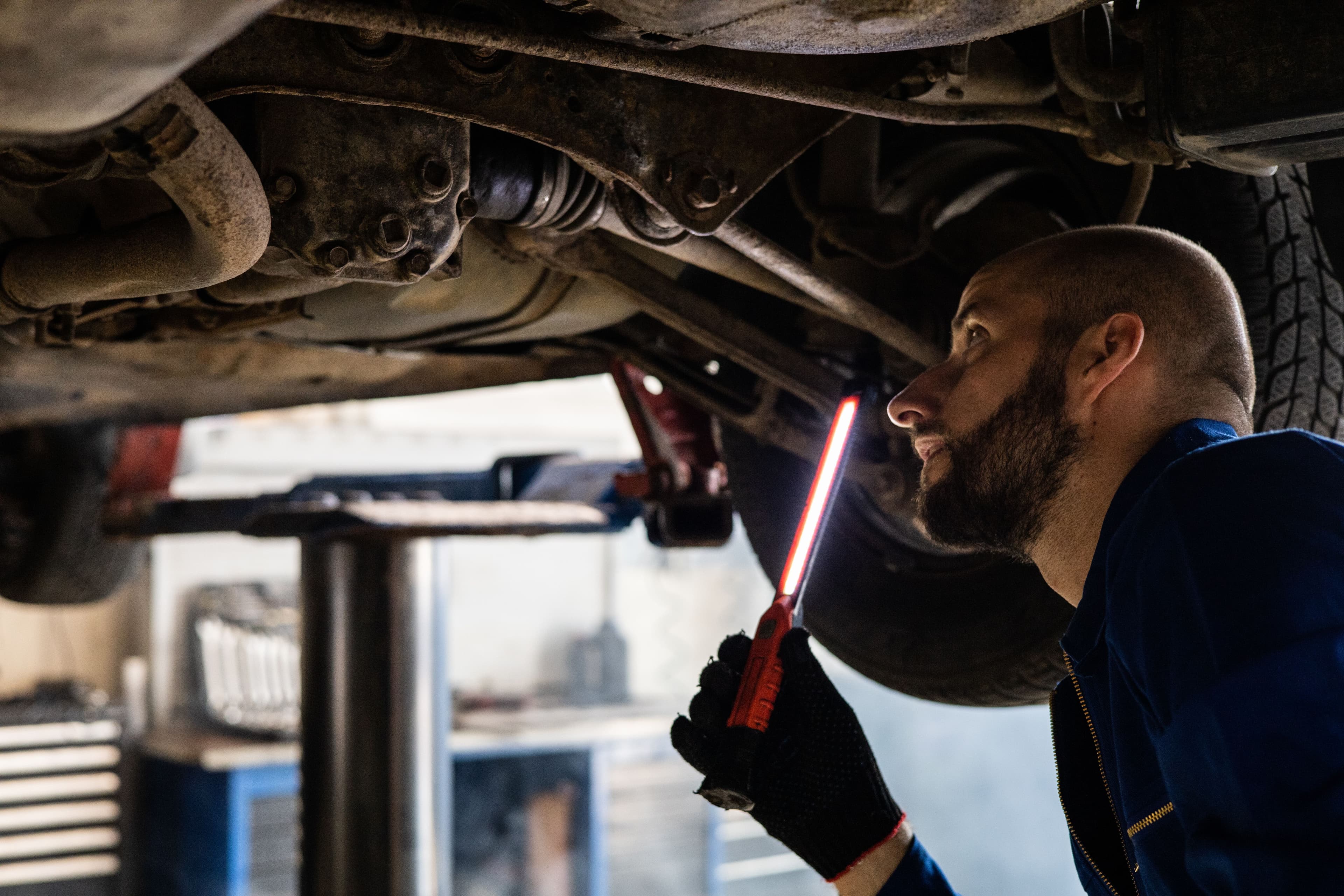
Some 2011–2014 BMW X5 and X6 vehicles were recalled because the universal joints in the front driveshaft could wear or corrode and eventually fail. Before buying a replacement shaft, check the VIN for an open recall. An eligible vehicle should follow BMW's recall remedy rather than treating a used part as the first solution.
Which BMW vehicles are covered by recall 17V-138?
The National Highway Traffic Safety Administration's acknowledgment of campaign 17V-138 identifies these U.S. applications:
- 2011–2013 BMW X5 xDrive35i, X5 xDrive50i, X5 M, and X5 xDrive35d.
- 2011–2014 BMW X6 xDrive35i, X6 xDrive50i, and X6 M.
- 2011 BMW X6 ActiveHybrid.
BMW's service bulletin describes the affected chassis as E70 X5, E71 X6, and E72 X6 ActiveHybrid vehicles produced from November 22, 2010 through April 22, 2013. Model-year ranges alone are not enough because production dates and campaign completion vary by individual vehicle. Start with the VIN decoder, then use the VIN with BMW's recall lookup or an authorized BMW Center to confirm whether the campaign is open.
The primary documents are BMW Service Information B26 02 17 and NHTSA's recall acknowledgment for 17V-138.
What fails in the front driveshaft?
BMW states that the front driveshaft universal joints may have been produced out of specification. Water or debris can enter a joint, leading to corrosion and excessive wear. The driver may first notice noise from the front driveline and then increasing vibration.
If a universal joint breaks, torque is no longer transmitted from the transfer case to the front wheels. BMW's recall documents say the rear driveline can remain operational, but continued driving with a broken shaft can damage nearby components and may eventually leave the vehicle inoperative. A new vibration or front-driveline noise on one of these vehicles should therefore be inspected promptly rather than treated as a harmless balance issue.
Check recall status before shopping for a shaft
Recall 17V-138 specifies replacement of the front driveshaft. BMW's bulletin lists front driveshaft part number 26 20 8 605 866 for the campaign repair, along with specified fasteners. That number is a useful reference to the recall document, not a universal interchange declaration for every shaft advertised online.
There is also an earlier BMW campaign, 16V-311, covering certain 2011 X5, X6, and X6 ActiveHybrid vehicles built from April through November 2010. A vehicle may fall into the earlier or later population based on its production date. Only a VIN-level check can establish the applicable campaign and whether the remedy has already been completed.
If the recall is open, arrange the repair with BMW. If it is closed or the shaft needs replacement for a different reason, then compare candidate inventory through parts search only after collecting the original shaft and vehicle identifiers.
Recall defect or another source of vibration?
A vibration does not identify the driveshaft by itself. Tire or wheel runout, a wheel bearing, a damaged axle, transfer-case wear, engine or transmission mounts, and other rotating components can produce similar complaints.
A qualified technician should inspect the complete driveline. BMW's earlier inspection instructions for these chassis called for checking both front-shaft universal joints for play while rotating the shaft through several positions. The instructions state there should be no play. Current repair information and safety procedures should control the inspection, especially because the vehicle must be raised and driveline components may be under load.
Evidence that strengthens a front-driveshaft diagnosis includes:
- Noise localized to the front driveline.
- Vibration that changes with road speed rather than engine speed.
- Corrosion, binding, or measurable play at a universal joint.
- Contact damage near the shaft caused by excessive movement.
- An open BMW recall for the exact VIN.
Do not run the vehicle on a lift or crawl underneath an unsupported vehicle to reproduce the problem.
Why a used BMW front driveshaft still requires exact fitment
E70, E71, and E72 are related chassis, but that does not make every shaft interchangeable. Engine, transmission, transfer case, flange design, shaft length, production date, and part-number supersession can affect fitment. The X6 ActiveHybrid also has application-specific service considerations.
Before ordering a used shaft, match:
- Full 17-character VIN and production date.
- Chassis code: E70, E71, or E72.
- Exact model and engine, including diesel, M, or ActiveHybrid variants.
- Original BMW part number and any documented supersession.
- Shaft length measured with the joints in the specified position.
- Bolt pattern, flange diameter, pilot dimensions, and fastener requirements.
- Condition of both universal joints, splines, tube, balance weights, and mounting faces.
- Donor VIN, donor application, mileage record, and reason for dismantling.
Photos should show the complete shaft, both joint areas, flanges, identification markings, and balance weights. A shaft with missing weights, impact dents, joint stiffness, rust bleeding from a bearing cap, or flange damage should not be accepted as a fitment match merely because its overall length looks close.
Used, repaired, and new shafts: how to compare
A used original shaft can be suitable when its identity and condition are documented and no open recall affects the donor component. A repaired shaft may have serviceable joints or balancing work, but the buyer should request the rebuilder's scope and final runout or balance documentation. A new or BMW-supplied campaign shaft provides a different provenance, yet it still must match the exact application.
For a recalled vehicle, the recall process takes priority. For a non-recall repair, ask the supplier to confirm the part number and application in writing. Submit the VIN, production date, original-shaft number, and clear tag photos with the parts quote request.
Installation checks that protect the replacement
Installation should follow current BMW repair instructions for the VIN. Reusing unspecified fasteners, forcing a mismatched flange, or allowing the shaft to hang from a joint can create a new problem. The technician should inspect the transfer-case output and front-differential input flanges, adjacent shields, mounts, and any components contacted by a failing shaft.
After installation, the shop should verify that:
- The shaft rotates without binding or contact.
- Correct fasteners and tightening procedures were used.
- Flange faces and pilots were clean and undamaged.
- No related transfer-case, differential, or underbody damage remains.
- The original noise or vibration is gone during a controlled road test.
Frequently asked questions
Does every 2011–2014 BMW X5 or X6 have this recall?
No. The covered models, production dates, and VIN population are specific. Check the exact VIN with BMW or NHTSA rather than relying only on the model year.
Can I replace only the universal joint?
BMW's recall remedy is replacement of the front driveshaft assembly. Outside a recall repair, any alternative must be evaluated by a qualified driveline specialist using current BMW information; it should not be assumed equivalent to the recall remedy.
Is a shaft from an X5 interchangeable with an X6?
Do not assume it is. Related chassis may use different applications according to engine, transfer case, production date, and part-number supersession. Match the VIN and original part number.
Can I keep driving if the vibration is mild?
BMW's recall documents describe increasing noise or vibration before a joint may break. Because failure can remove drive to the front axle and damage nearby parts, arrange an inspection promptly and avoid continued driving if the noise or vibration worsens.
Bottom line
For an E70 X5, E71 X6, or E72 X6 ActiveHybrid with front-driveline noise or vibration, check the VIN for recall 16V-311 or 17V-138 before purchasing anything. If no open recall applies, diagnose the complete driveline and match a replacement front driveshaft by VIN, production date, powertrain, original part number, dimensions, and flange details.