Car Maintenance & Repair · Oct 21, 2026
ABS Module Won’t Communicate: Power, Ground, Network or Failed Unit?
An ABS module that will not communicate may have a power, ground, network, connector, or internal fault. Diagnose first, then match the replacement.
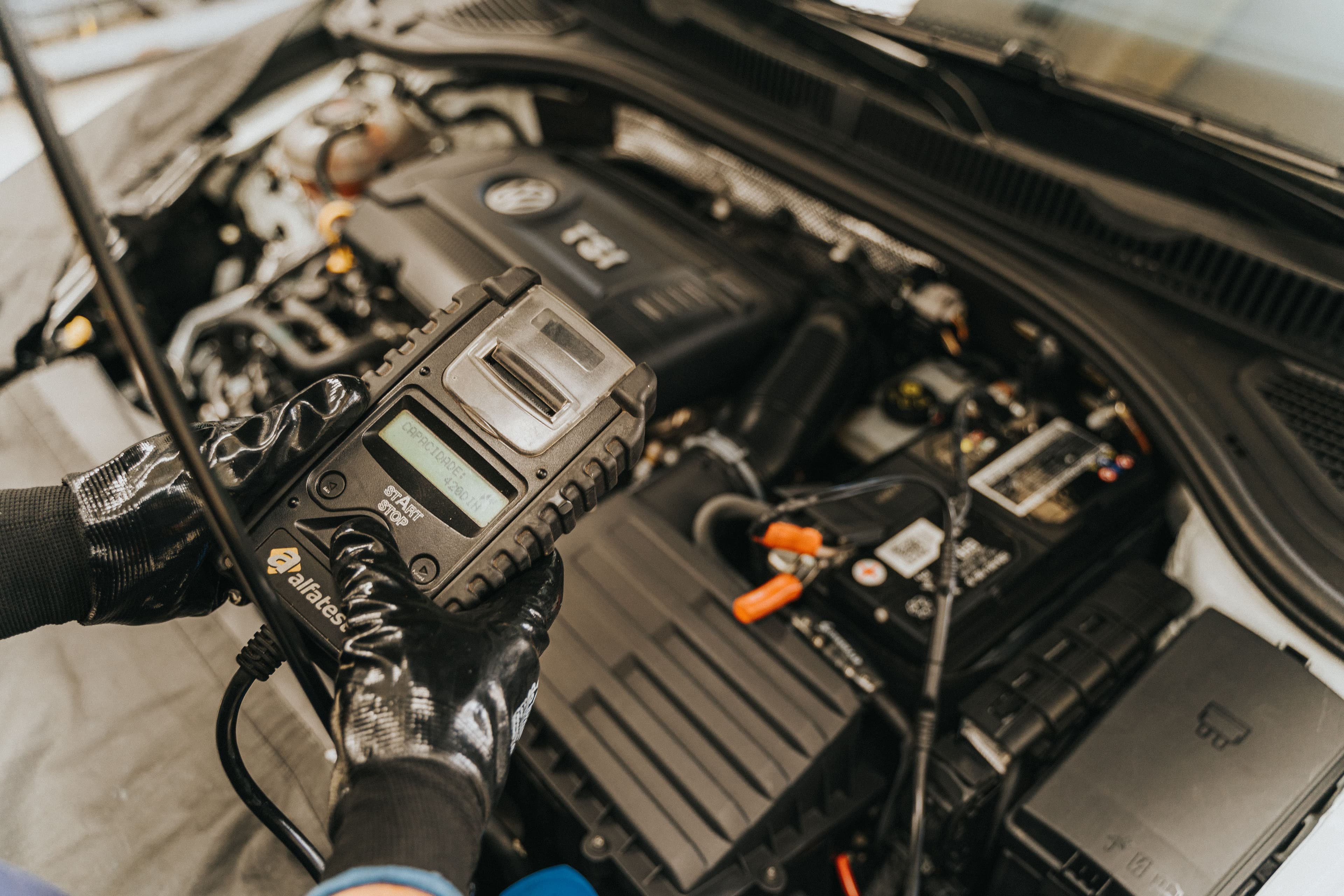
An ABS module that will not communicate with a scan tool is not automatically a failed module. The correct first move is to confirm the scan tool can access the vehicle, save codes from every responding module, and test the ABS unit’s power, ground, connector, and network circuits. Replacement becomes reasonable only after those supporting circuits pass the vehicle manufacturer’s diagnostic procedure.
What “no communication” actually means
The anti-lock brake system may be identified as ABS, EBCM, ESC, DSC, VSA, or by another manufacturer-specific name. If a scan tool reports that this controller is offline, the failure can be in the controller—but it can also be upstream.
A blown fuse, weak battery, excessive voltage drop, damaged ground, backed-out connector terminal, water intrusion, open communication wire, shorted network branch, or an incompatible scan tool can all produce a similar symptom. That is why an ABS warning lamp and a U-code should be treated as starting points, not a parts order.
First compare the scan result across the vehicle:
- If no modules communicate, investigate the diagnostic connector, scan tool setup, battery condition, and the vehicle’s primary network.
- If most modules communicate but the ABS controller does not, focus on the ABS controller’s dedicated power feeds, grounds, connector, and network branch.
- If communication is intermittent, preserve freeze-frame and history data before disturbing wiring or disconnecting the battery.
- If other modules store U0121, they have lost messages they expected from the ABS controller. That code does not, by itself, prove the ABS unit is internally defective.
Begin with battery voltage and a complete vehicle scan
Electronic brake controllers need stable voltage to start and remain online. A battery that is discharged, a loose terminal, or resistance in a main cable can create several unrelated-looking warnings at once.
This is not just theory. A General Motors service bulletin for specified 2014–2017 full-size trucks and SUVs lists U0121 among possible network codes associated with conditions including a poor body control module ground, high-resistance battery-cable connections, and a discharged or faulty battery. The bulletin’s scope is model-specific, but its lesson is broadly useful: diagnose the power supply before condemning a controller.
Record current, history, and pending codes from every module that still responds. Note which controllers report losing contact with the ABS unit and whether any low-voltage codes are present. Clear codes only after the original record has been saved.
Verify ABS power and ground under load
A fuse that looks intact does not prove the circuit can carry current. Use the factory wiring diagram for the exact VIN to identify every ABS-module battery feed, ignition feed, ground, splice, and connector terminal. Some units have more than one power feed, so finding voltage on a single pin is not enough.
A technician should check:
- Battery state and terminal security.
- All ABS-related fuses on both sides of the fuse, with the circuit operating when the procedure requires it.
- Battery and ignition voltage at the correct module pins.
- Ground integrity with a loaded voltage-drop test, not only a continuity test.
- Connector terminal tension, corrosion, moisture, damaged seals, bent pins, and evidence of overheating.
Testing must follow the service information for the vehicle. Probing the wrong terminal, using an unsuitable test light, or shorting adjacent pins can damage a controller or network.
Check the communication network before ordering a unit
Modern ABS controllers exchange data with the engine, transmission, steering, body, and restraint systems. A network fault can therefore make a healthy ABS controller appear dead.
Inspect areas affected by recent repairs, collision damage, water leaks, rodent damage, or aftermarket equipment. Pay particular attention to harness sections near the hydraulic unit, battery tray, inner fender, and chassis grounds. An official Freightliner diagnostic bulletin provides a model-specific example: it directs technicians to check power, ground, and CAN wiring between the ABS and stability-control modules before replacing the stability-control module.
Network resistance and waveform checks require the correct connector location, ignition state, module sleep state, and OEM specifications. Do not rely on a universal resistance number or disconnect controllers at random. A qualified technician can isolate a shorted branch without creating new faults.
When an ABS unit becomes the likely cause
Replacement is more defensible when all specified power feeds and grounds pass loaded tests, the relevant network circuit passes the manufacturer’s checks, connector pins are sound, and the controller still will not communicate. An internal controller fault code that the OEM diagnostic tree confirms can also support replacement.
Before buying, decide what must be replaced. Depending on the design, the electronic controller may separate from the hydraulic control unit, while other applications are serviced as a complete assembly with pump, valve block, and electronics. The symptom alone does not determine which configuration your vehicle uses.
If you are comparing a used assembly, the ABS unit coding and bleeding checklist explains why installation can involve more than bolting on the part.
ABS replacement fitment checklist
Use this checklist before requesting or approving a replacement:
- Decode the vehicle identification number and confirm year, make, model, engine, drivetrain, body configuration, and relevant brake or stability-control options.
- Match the complete part number, including every prefix, suffix, revision, and label code. Similar-looking housings are not proof of interchange.
- Confirm whether the listing is for the electronic module, hydraulic block, pump motor, or complete ABS assembly.
- Ask whether the replacement must be programmed, configured, security-authorized, or initialized to the vehicle.
- Determine whether steering-angle, yaw-rate, or other calibrations are required afterward.
- If any hydraulic line will be opened, plan for the correct brake-fluid procedure and any scan-tool-controlled automated bleed specified by the manufacturer.
- Keep the original unit available until the replacement is verified; its label and configuration can help resolve an interchange question.
- Provide the exact identifying information when you request an ABS unit quote.
Programming and bleeding requirements vary by application. Confirm them in current OEM service information or with the installer before the vehicle is disassembled.
Failed module or wiring problem: a practical comparison
A wiring or supply problem is more likely when multiple controllers drop offline, several unrelated warning messages appear together, symptoms change with battery load or vehicle movement, or visible corrosion and harness damage are present.
An internal ABS fault becomes more likely when the problem is isolated to the ABS controller, every required feed and ground remains correct under load, the network branch meets specification, the connector is undamaged, and the OEM diagnostic sequence points to controller replacement.
Neither pattern is conclusive without testing. Buying first and diagnosing later can leave the original no-communication fault unchanged while adding programming or bleeding work.
Common questions
Can a weak battery cause an ABS communication code?
Yes. Low voltage or excessive resistance in a battery connection can prevent a controller from starting correctly or can interrupt network communication. Test the battery and main connections before treating a communication code as proof of module failure.
Does U0121 mean the ABS module is bad?
No. U0121 means another controller stopped receiving expected communication from the ABS controller. The cause may be loss of ABS power or ground, a network fault, connector damage, or an internal controller failure.
Can I install an ABS module with the same connector?
Connector shape is not a reliable interchange method. Match the full part number and vehicle configuration, then confirm programming, calibration, and hydraulic-service requirements.
Will an ABS module replacement require brake bleeding?
If hydraulic lines or the hydraulic control unit are opened, bleeding is normally required, and some vehicles specify an automated scan-tool procedure. A controller-only repair may differ. Follow the exact service procedure for the VIN.
The safest buying decision
Treat “no communication” as a circuit diagnosis, not a component verdict. Save the full scan, verify battery condition, test every required feed and ground under load, inspect the connector, and check the correct network branch. Once those checks establish that the ABS unit itself is the failed link, exact part-number matching and installation planning make the replacement far less likely to create a second problem.