Car Maintenance & Repair · Oct 19, 2026
ABS Activates at Low Speed: Sensor, Hub or Module?
Learn why ABS may activate during normal low-speed stops and how to separate sensor, hub and tone-ring faults from module failure.
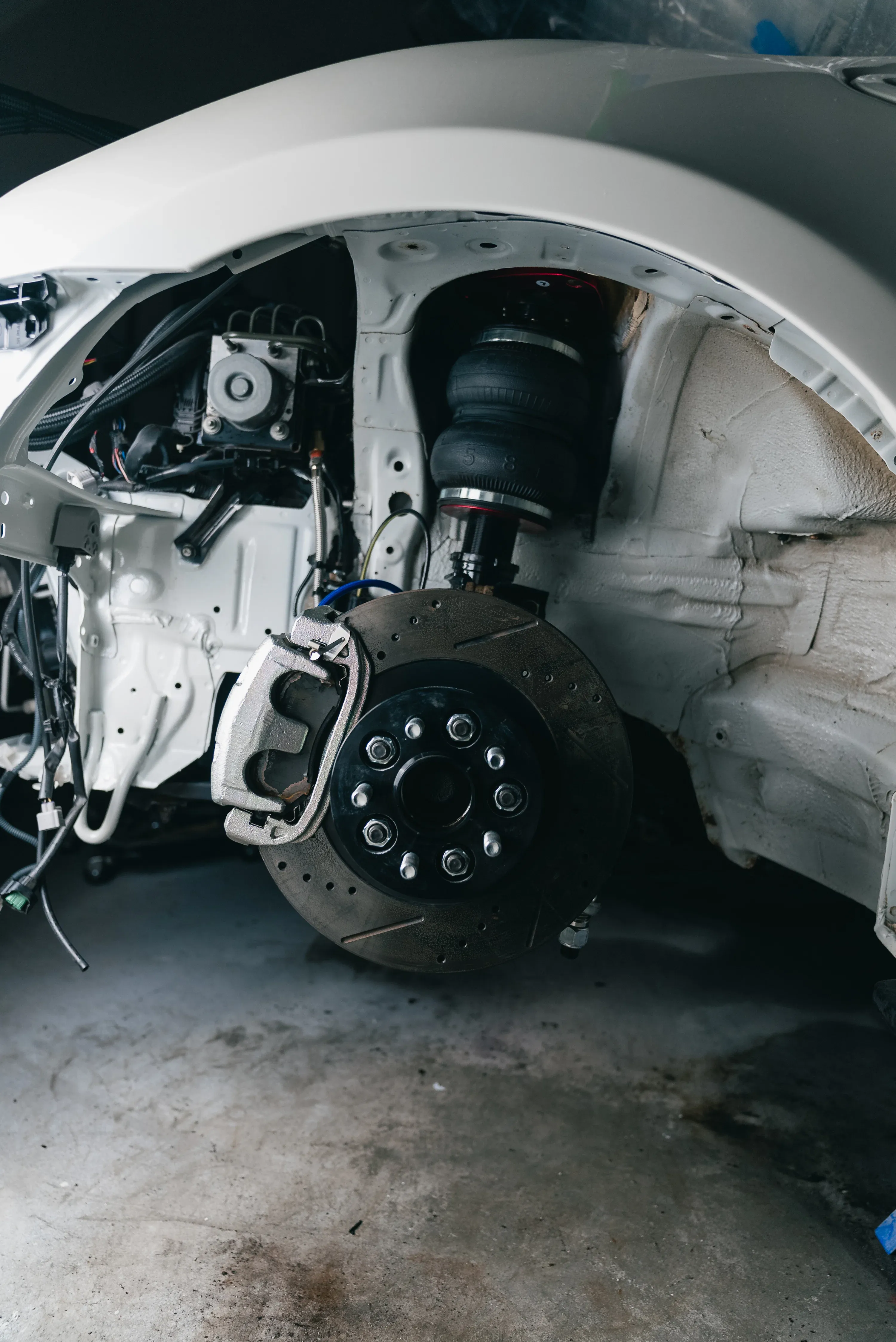
ABS pedal pulsation during a normal low-speed stop does not automatically mean the hydraulic pump or control module has failed. A wheel-speed signal can drop out or fluctuate because of sensor corrosion, debris, an incorrect air gap, wiring damage, a damaged encoder or tone ring, or a hub problem. Diagnose the live wheel-speed signals and the mechanical sensor interface before buying an ABS unit.
What unwanted ABS activation feels like
Drivers may notice a brief buzzing or grinding-like sound, rapid pedal pulsation, or a momentary change in braking feel just before the vehicle stops. The event can occur even on dry pavement without hard braking. An ABS warning light may be on, intermittent or absent.
Because braking is safety-critical, do not treat changed braking behavior as a routine parts-shopping problem. If stopping performance feels reduced, a red brake warning appears, the pedal is unusually soft or hard, or the vehicle pulls, follow the owner’s manual and arrange professional inspection.
Why low-speed sensor errors can activate ABS
The ABS controller compares wheel-speed inputs. As the vehicle slows, a weak or irregular signal from one wheel may appear to the controller as a wheel approaching lockup. The system can then command pressure modulation even though the road surface has normal traction.
Manufacturer information provides clear examples:
- General Motors published a bulletin for specified older Cadillac, Chevrolet, GMC and Oldsmobile 4WD/AWD vehicles describing ABS activation below about 5 mph with no diagnostic trouble codes. Rust and debris under the wheel-speed sensor could increase the gap between the sensor and hub reluctor ring, weakening the signal.
- GM also conducted a safety recall on certain 1999–2002 Chevrolet and GMC trucks and SUVs in severe-corrosion areas because corrosion between the front hub/bearing assembly and wheel-speed sensor could cause unwanted ABS activation at low speed.
- Kia’s 2024 service campaign for 2020–2024 Telluride vehicles describes moisture contamination and corrosion causing wheel-speed-sensor signal fluctuation, which could produce intermittent low-speed ABS activation. The campaign procedure includes sensor inspection or replacement when needed and HECU software updating.
- Stellantis service guidance for specified applications directs technicians to clean debris and rust particles from the wheel-speed sensor, hub and tone-wheel area, test-drive, and replace parts only if the condition persists according to the procedure.
These examples are vehicle-specific. They do not create a universal repair or prove that another vehicle has the same fault. They demonstrate why signal diagnosis should come before module replacement.
What the technician should test
A useful diagnosis combines codes, live data and physical inspection.
- Scan the ABS, stability-control and related modules with equipment that can access manufacturer-specific data.
- Save current, history and pending codes before clearing anything.
- Reproduce the concern safely and record all wheel-speed signals at the moment it occurs.
- Compare signals as the vehicle slows through the affected speed range.
- Inspect sensor wiring, connectors, routing, power and grounds where applicable.
- Check the sensor mounting surface for corrosion, debris or damage.
- Inspect the tone ring or magnetic encoder for cracks, missing teeth, contamination or installation damage.
- Check the wheel bearing or hub for play, roughness and correct seating using the service procedure.
- Verify that recent hub, axle, brake or suspension work did not disturb the sensor, wiring or encoder.
- Confirm tire size and inflation when the diagnostic procedure requires it.
- Check for applicable recalls, campaigns, bulletins and software updates by VIN.
- Retest after the approved repair before condemning another component.
Do not rely only on resistance measurements or a generic code description. Some faults appear only while the wheel rotates, under load, at a particular temperature or within a narrow low-speed range.
Sensor, hub, tone ring or ABS unit?
The repair should follow the confirmed fault:
- Sensor or mounting issue: The signal is weak or irregular and inspection finds corrosion, contamination, damage or an incorrect mounting condition addressed by the manufacturer’s procedure.
- Hub or bearing issue: The encoder is integrated into the hub, the bearing has excess play, or the hub assembly is damaged.
- Tone ring or magnetic encoder: The ring is cracked, contaminated, missing teeth, incorrectly oriented or otherwise damaged.
- Wiring or connector: Signal loss is traced to an open, short, corrosion, terminal problem or harness damage.
- Software or calibration: An applicable manufacturer campaign or bulletin prescribes an update.
- ABS module or hydraulic unit: Pinpoint tests confirm an internal electronic or hydraulic fault after inputs, wiring, power, ground and related components have been checked.
The ABS module, pump and wheel-speed-sensor guide explains how those parts differ and what information a buyer should obtain before ordering.
Buyer checklist before ordering an ABS unit
If diagnosis does confirm the module or hydraulic assembly, collect:
- Full 17-character VIN
- Original unit’s complete part number and every suffix
- Clear photos of its label, connectors, ports and mounting points
- Exact ABS and stability-control codes
- Wheel-speed live-data findings
- Tests that ruled out sensors, hubs, tone rings, wiring, power and ground
- Whether the electronic controller, hydraulic modulator and pump are separate or combined
- Programming, coding, initialization and calibration requirements
- Required brake-bleeding procedure and scan-tool functions
- Written list of components included with the replacement
- Installer approval of the proposed interchange
Use the VIN decoder to organize basic vehicle details, but confirm the original part number and configuration as well. Include the diagnosis and label photos with the parts quote request.
Frequently asked questions
Can ABS activate at low speed without a warning light?
Yes. Some manufacturer bulletins describe low-speed activation without stored codes. Live-data recording and physical inspection may be needed to capture the fault.
Does pedal pulsation prove the ABS pump is bad?
No. Pulsation can mean the system is actively modulating pressure in response to a wheel-speed input. The reason for that input must be diagnosed.
Can rust under a sensor matter?
Yes, on designs covered by specific manufacturer procedures. Corrosion can change the sensor’s position or air gap and weaken its signal.
Is the wheel-speed sensor always separate from the hub?
No. Designs vary. The sensor, encoder or tone ring may be separate or integrated with the hub or bearing assembly.
Can a used ABS module be installed without programming?
That depends on the exact vehicle and unit. Confirm coding, calibration, initialization and bleeding requirements with the installer before purchase.