Car Maintenance & Repair · Oct 22, 2026
4WD Will Not Engage: Actuator, Front Axle or Transfer Case?
4WD that will not engage may involve controls, wiring, actuators, the front axle or the transfer case. Diagnose the failed stage before buying.
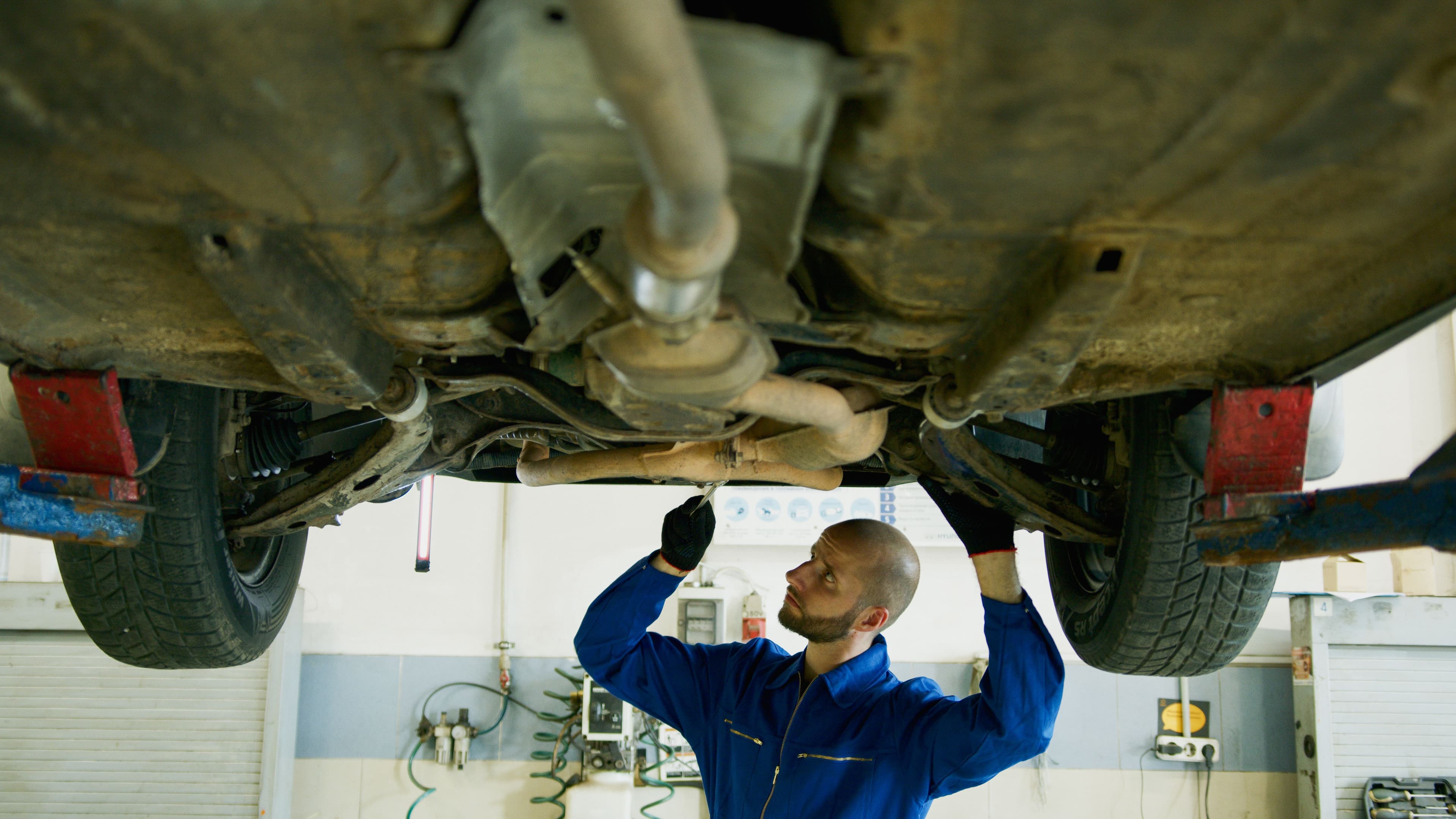
A four-wheel-drive system that will not engage does not automatically need a transfer case. The fault may be an operating-condition mismatch, low voltage, a control-module or software issue, damaged wiring, a selector input, a transfer-case actuator, a front-axle actuator, or an internal mechanical disconnect. Preserve the warning message and diagnostic data, then confirm which part of the system failed to complete the requested shift before buying an assembly.
First, define what “will not engage” means
A useful diagnosis starts with the exact behavior. “4WD does not work” can describe several different conditions:
- The selector is moved, but no indicator appears.
- The indicator flashes and never becomes steady.
- A “Service 4WD” message appears.
- The indicator shows 4WD, but the front wheels provide no drive.
- 4HI works, but 4LO does not.
- The vehicle engages only after moving, stopping or cycling the ignition.
- The system shifts mechanically but binds, chatters or makes abnormal noise.
These are not interchangeable symptoms. The indicator logic, permitted shift speed and required transmission position vary by vehicle. Consult the owner information for the exact model rather than repeatedly operating the selector.
If the vehicle is grinding, binding, leaking heavily or losing drive, stop using it until it is inspected. Repeated shift attempts will not correct a mechanical failure and can make useful evidence harder to interpret.
Confirm the required engagement conditions
Some apparent failures occur because the request does not meet the system’s programmed conditions. Depending on the vehicle, a 4LO shift may require the vehicle to be stopped or moving very slowly, the brake applied and the transmission in Neutral. Other modes may permit shift-on-the-fly operation only within specified speeds.
Tire size and inflation also matter on many four-wheel-drive and all-wheel-drive systems. A Toyota diagnostic tip for certain 2008–2013 Sequoia vehicles instructs technicians to check tire-size differences, uneven wear and incorrect pressures when engagement is harsh or fails under load but works with the wheels raised. That is a model-specific example, not a universal procedure, but it illustrates why the test conditions must be controlled.
Before assuming the transfer case is defective, record:
- Requested mode and current indicated mode
- Whether the light is off, flashing or steady
- Any chime or dashboard message
- Vehicle speed and transmission position during the request
- Whether all tires match in specified size and have appropriate pressure
- Whether the symptom changes when cold, hot or under load
Scan the correct modules before clearing anything
A basic engine-code reader may not communicate with the transfer-case, four-wheel-drive, body or chassis controller. Use equipment capable of reading every relevant module. Save current, pending and history codes, freeze-frame information and module data before disconnecting the battery or clearing faults.
Live data can show whether the controller sees the selector request and whether position switches agree with the commanded mode. A flashing indicator often means a requested action did not finish, but the exact meaning must come from the service information for that vehicle.
Check battery condition, charging voltage, fuses, controller power and grounds. Inspect connectors and harness sections near the transfer case, front axle and underbody for water entry, corrosion, pulled terminals, impact damage or chafing. A poor electrical connection can prevent an otherwise serviceable actuator from completing a shift.
Separate software, wiring and actuator faults
The actuator is only one part of the shift system. A command may begin at a dash switch, pass through a controller and wiring, operate a motor, and then be confirmed by position or limit switches. Replacing the motor without checking the command, circuit and position feedback can leave the original fault untouched.
Manufacturer information demonstrates how different the repair can be. General Motors bulletin 22-NA-147 covers specified 2020–2023 Chevrolet Silverado and GMC Sierra HD vehicles with a particular transfer-case option, message and code. Its correction is to verify transfer-case-control-module software and, depending on the result, update the module or perform an actuator learn. That bulletin does not authorize the same repair on other vehicles; it shows that a warning can be caused by control logic rather than failed gears.
Another GM information document for certain 2007–2013 trucks and SUVs directs technicians investigating a defined code and engagement concern to inspect a front-axle-actuator connector for moisture and terminal corrosion. Again, the lesson is diagnostic: a front-axle electrical problem can resemble a transfer-case problem.
Determine whether the transfer case or front axle failed to engage
Part-time 4WD vehicles may require both the transfer case and a front-axle disconnect to reach their commanded positions. A scan tool, manufacturer test sequence and careful mechanical inspection can identify which action did not complete.
For certain 2008–2013 Toyota Sequoia applications, the maker’s diagnostic tip compares selector input, transfer-case position and front-differential engagement signals. If the transfer-case position agrees with the request but the front differential does not, the inspection moves toward the axle-disconnect system and its circuits.
Conversely, an indicator that becomes steady does not prove power is reaching the front wheels on every design. A GM diagnostic tip for specified 2015–2017 Silverado and Sierra configurations explains how technicians can distinguish a mechanical disconnect inside the transfer case from one in the front axle after the commanded positions have been achieved. Use the appropriate factory test for the actual vehicle; do not improvise this check with the drivetrain unsupported.
When internal transfer-case failure becomes more likely
Assembly replacement becomes more reasonable when testing confirms that commands, circuits, actuator operation and external engagement components are working but the unit cannot transmit torque or hold the requested position. Supporting evidence may include:
- A confirmed broken gear, sprocket, chain, shaft, fork or internal coupling
- Large metal fragments or identifiable component pieces in the fluid
- Severe bearing noise or excessive internal play
- Loss of drive through the unit despite verified actuator position
- A cracked or damaged case
- A manufacturer procedure directing replacement for the exact code and application
For example, an FCA bulletin for certain 2021–2022 Jeep Grand Cherokee vehicles equipped with a specified one-speed 4WD system directs transfer-case replacement only when the defined actuator-slip code and application conditions are present. It is a narrow repair instruction, not evidence that every “Service 4WD” message needs a transfer case.
If inspection finds metal or contaminated lubricant, the transfer-case fluid guide explains how debris type, operating symptoms and service information affect the repair decision.
Repair hierarchy before buying an assembly
A practical decision order is:
- Correct an improper shift procedure or tire mismatch identified by the manufacturer’s instructions.
- Repair verified battery, fuse, power, ground, connector or harness faults.
- Address a confirmed switch, sensor, controller-software or calibration problem.
- Repair or replace a proven transfer-case or front-axle actuator fault.
- Choose internal repair or complete transfer-case replacement only when mechanical failure is supported by testing.
This order avoids treating a system-level symptom as proof of one failed component.
Used transfer-case fitment checklist
Once replacement is justified, match the actual unit rather than relying on year, make and model alone. Start with the full vehicle identification number using the VIN decoder, then verify the original transfer-case label, stamped identifiers and interchange information.
Before ordering, confirm:
- Full 17-character VIN and production date
- Exact transmission and engine configuration
- Two-speed or one-speed system and available drive modes
- Transfer-case model, tag number and original part number
- Input and output spline counts or flange and yoke styles
- Front and rear driveshaft connection details
- Electrical connector, sensor and actuator arrangement
- Included and reused modules, actuator, brackets and switches
- Required lubricant specification and fill procedure
- Programming, setup or actuator-learn requirements
- New seals, gaskets, plugs and one-time-use fasteners required for installation
Ask the installer to document why the old assembly failed and whether another fault—such as tire mismatch, a front-axle problem or contaminated fluid—must be corrected before the replacement is operated. Submit the VIN, tag photos and diagnosis with the transfer-case quote request so fitment can be checked from identifiers rather than appearance.
Frequently asked questions
Can a weak battery cause a Service 4WD message?
Yes, unstable or insufficient voltage can disrupt controller and actuator operation on some vehicles. Test the battery, charging system, power feeds and grounds using the vehicle maker’s procedure before condemning the transfer case.
Does a flashing 4WD light mean the actuator is bad?
Not necessarily. It generally indicates that the system has not confirmed the requested state, but the cause may be operating conditions, voltage, wiring, a sensor, software, either actuator or a mechanical problem. Read the vehicle-specific codes and data.
If 4HI works but 4LO does not, is the transfer case broken?
Not automatically. First verify the required speed, brake and transmission-position conditions. Then inspect codes, selector input, position feedback and actuator operation according to the service manual.
Can I order a used transfer case from the VIN alone?
The VIN is essential but may not resolve every production or option difference. Confirm the original tag or part number, transmission, drive system, connectors, splines, flanges and any superseded numbers.
Bottom line
A no-engagement complaint belongs to the entire 4WD control and driveline system until testing isolates the failed stage. Confirm the operating conditions, preserve codes and live data, verify voltage and circuits, then distinguish a transfer-case shift problem from front-axle engagement and internal loss of drive. Buy a complete transfer case only when the diagnosis and fitment evidence support it.