Toyota · Oct 25, 2026
2014–2019 Toyota 4Runner Rear Whine: Differential or Driveshaft?
Use VIN, build date, drivetrain and trim to diagnose 2014–2019 Toyota 4Runner rear whine before buying a differential.
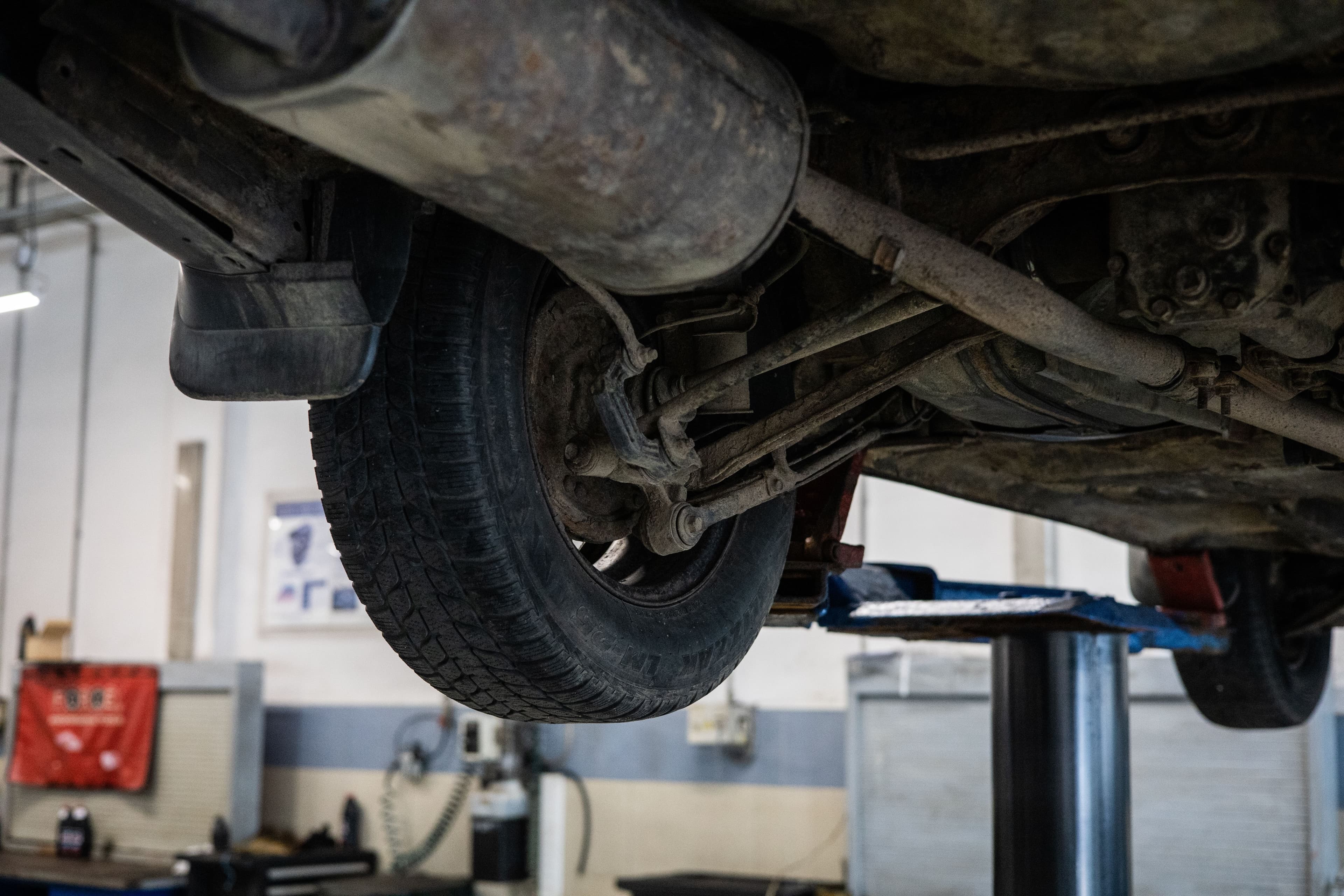
A 40–60 mph whine from a 2014–2019 Toyota 4Runner does not automatically mean every truck needs the same rear differential. Toyota bulletin T-SB-0074-19 uses the VIN, production status, trim and drivetrain to choose among a differential carrier, propeller shaft and noise-control parts. Diagnose the sound first, then match any replacement assembly to the exact vehicle.
What Toyota’s bulletin actually covers
Toyota issued T-SB-0074-19 for some 2014–2019 4Runner vehicles with a whine or groan from the rear. The bulletin describes the noise during steady driving, slight acceleration or slight deceleration at approximately 40–60 mph. Toyota attributes the condition to rear differential vibration transferring through the chassis and body.
This is a technical service bulletin, not a safety recall and not a statement that every 4Runner in those model years has a defective differential. The official Toyota bulletin says that trucks without the described sound should continue through normal diagnosis.
Why the repair path changes by VIN and trim
The bulletin separates vehicles around a production-change VIN and then applies different parts and steps. For certain pre-countermeasure vehicles, the procedure includes replacing the rear differential carrier. For post-countermeasure vehicles, the procedure instead directs technicians toward the propeller shaft after other noise-control steps.
Trim matters too. Toyota’s parts table separates models excluding TRD Pro and Off-Road versions with a differential lock, while the repair notes call out TRD Pro and Off-Road applications for a different path. Two-wheel-drive and four-wheel-drive trucks are also treated differently because the bulletin says not to replace the propeller shaft on a 2WD vehicle.
That is why a seller’s phrase such as “fits 2014–2019 4Runner” is not enough. Begin with the VIN using the VIN decoder, then confirm build date, drivetrain and axle equipment from reliable vehicle records and the original assembly.
Differential whine versus other rear-vehicle noises
A differential gear or bearing noise often changes between acceleration, coast and deceleration. Tire noise is usually more dependent on road surface, while a wheel bearing may respond more clearly to vehicle loading during a gentle left or right turn. A propeller-shaft concern can produce vibration or a speed-related drone as well as noise.
Toyota’s bulletin is unusually helpful because it shows that transmitted vibration can make a real rear differential noise seem louder inside the body—and that the propeller shaft may also be part of the correction on specific configurations. A proper road test should record:
- Speed at which the sound begins and ends.
- Whether it occurs on throttle, coast or both.
- Whether engine speed or vehicle speed changes the frequency.
- Whether the noise changes on different road surfaces.
- Whether there is vibration in the seat, floor or steering wheel.
- Whether the truck is in two-wheel drive, four-wheel drive or another selectable mode.
- Fluid condition, leakage and metal contamination at the rear differential.
Do not order an assembly solely from a phone recording. Confirm the source with chassis microphones or another appropriate diagnostic method when ordinary road testing cannot isolate it.
Buying checklist for a used 4Runner rear differential
Before searching Toyota parts by brand, collect and compare:
- Full 17-character VIN.
- Model year and production date.
- Two-wheel-drive, part-time four-wheel-drive or full-time four-wheel-drive configuration.
- Exact trim, including Limited, TRD Pro or Off-Road.
- Presence or absence of the factory rear differential lock.
- Axle code from the certification label and verified gear ratio.
- Complete identification number and suffix from the original carrier.
- Connector count and position for any locker or sensor hardware.
- Mounting points, flange style and companion hardware.
- Donor VIN, mileage documentation and clear photos of the replacement unit.
The bulletin lists differential carrier 41110-35C80 for a defined application, but a service-bulletin number is not a universal interchange number. Do not apply it to a locker-equipped truck or another configuration without catalog-level confirmation.
What to inspect before installation
A used carrier should be checked for damaged housings and mounting ears, leaks at the pinion and axle seals, corrosion at mating surfaces, damaged connectors and abnormal input-flange play. Rotate the input and outputs by hand where practical and look for roughness, binding or inconsistent backlash.
Inspect the removed fluid and magnetic drain plug when available. Heavy metal fragments or severe contamination may point to internal damage; clean fluid alone does not prove the gears and bearings are quiet under load. The propeller shaft, universal joints, flange surfaces, axle bearings, tires and wheel bearings should also be evaluated so a second source is not mistaken for a bad replacement differential.
Installation requires the correct fluid specification, fill procedure, fastener torque, driveshaft indexing and any vehicle-specific calibration or locker checks. Use the applicable Toyota repair information rather than generic torque values.
Should you buy the differential before diagnosis?
Usually not. A buyer should first reproduce the exact speed-and-load condition, identify whether the truck falls before or after Toyota’s production change and confirm the trim-specific bulletin path. That prevents buying a carrier when the applicable procedure points elsewhere.
If diagnosis does identify the carrier, provide the VIN, build date, axle code, drivetrain, locker status, original number and donor details in the parts quote request. Written interchange confirmation is more useful than a year-range claim.
Frequently asked questions
Does T-SB-0074-19 apply to every 2014–2019 4Runner?
No. It applies to vehicles that exhibit the described 40–60 mph whine or groan. Toyota also divides the repair by production status, drivetrain and trim.
Is the noise always the rear differential?
No. The bulletin’s repair sequence can include body-mass and damping changes, a rear differential carrier or a propeller shaft depending on the vehicle. Tires, wheel bearings and other driveline components still require ordinary diagnosis.
Can a 4WD carrier fit a 2WD 4Runner?
Do not assume so. Drivetrain, axle ratio, trim, differential-lock equipment, flange design and identification numbers must all match the verified application.
Why does axle ratio matter?
The rear axle ratio must be correct for the vehicle. On a four-wheel-drive truck, the front and rear final-drive ratios must remain compatible; a mismatch can create driveline binding and damage.
Is a Toyota service bulletin the same as a recall?
No. A TSB communicates a diagnostic or repair procedure for a known condition. Recall coverage and TSB-related repair eligibility are separate questions, so check the VIN and current manufacturer information.